


How to choose the right LED strip
HOW TO CHOOSE THE RIGHT LED STRIP
\nThe LED strip market today offers such a wide variety of products that it is easy to get lost in technical specifications. 12V or 24V? 60 or 120 LEDs per meter density? IP20, IP44 or IP67? CRI 80 or CRI 90+? Warm white, cool white or adjustable CCT? This guide helps you understand each parameter and choose the LED strip perfectly suited to your application — under-cabinet, cove lighting, stairs, terraces, pools or illuminated signage.
\n\n12V or 24V: which voltage to choose?
\n\n
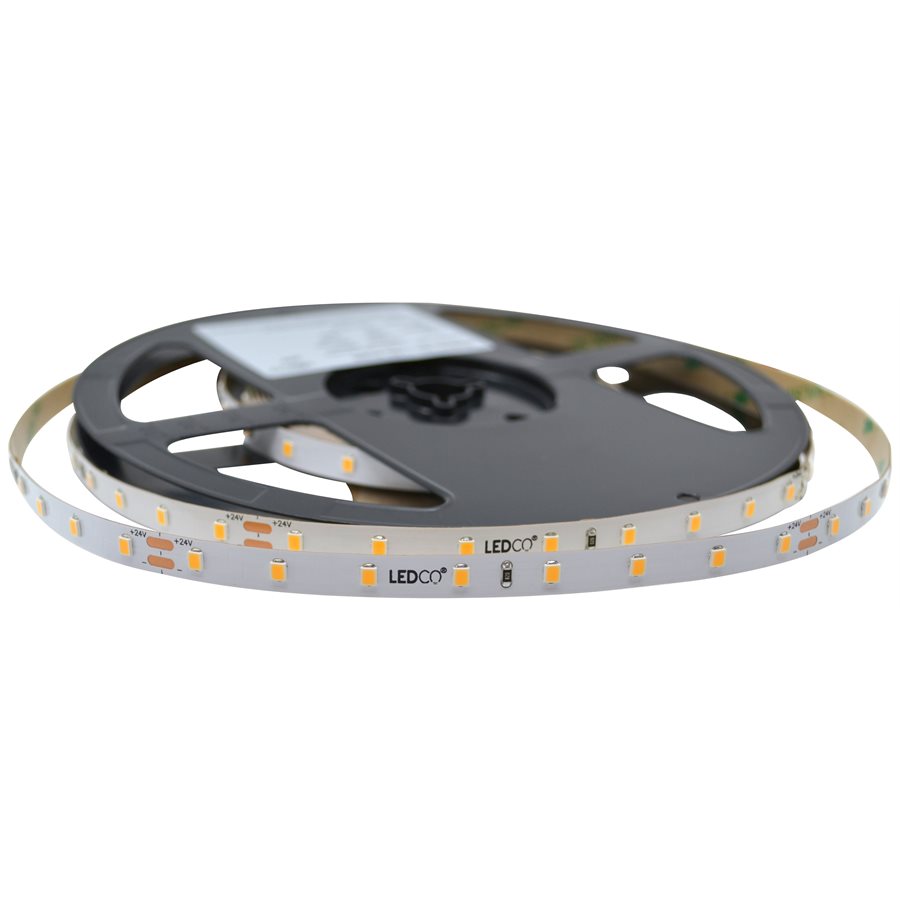
Voltage is the first parameter to determine, as it influences the maximum strip length without voltage drop, compatibility with available power supplies and control options. A 12V LED strip suits lengths of 5 meters maximum per segment. Beyond that, the voltage drop at the strip's end causes a visible brightness loss — the first LEDs shine brighter than the last. For short applications like a kitchen cabinet section (under 3 meters per segment), 12V is ideal. The 24V LED strip allows continuous runs of 10–15 meters without noticeable voltage drop, making it ideal for long corridors, living room coves, terraces and any application requiring great continuity. LEDCO recommends 24V for most commercial installations and any residence where lengths exceed 5 meters.
\n\nLED density: 60, 84 or 120 LEDs/m
\n\n
LED density per meter determines the uniformity of the light beam and lighting intensity. A low-density strip (30–60 LEDs/m) produces visible light points separated by dark zones — acceptable for indirect ambient cove lighting hidden in a recess, but insufficient for functional lighting or applications where the strip is visible. A high-density strip (120–180 LEDs/m) produces a perfectly uniform light line with no visible granulation, ideal for under-cabinet use, visible aluminum profiles and shower niches. For applications with an aluminum profile and frosted diffuser, 84–120 LEDs/m density is recommended for a homogeneous light line. The profile diffuser distributes and softens light but cannot compensate for excessive spacing between LEDs on a low-density strip.
\n\nIP rating: from IP20 to IP68
\n\n
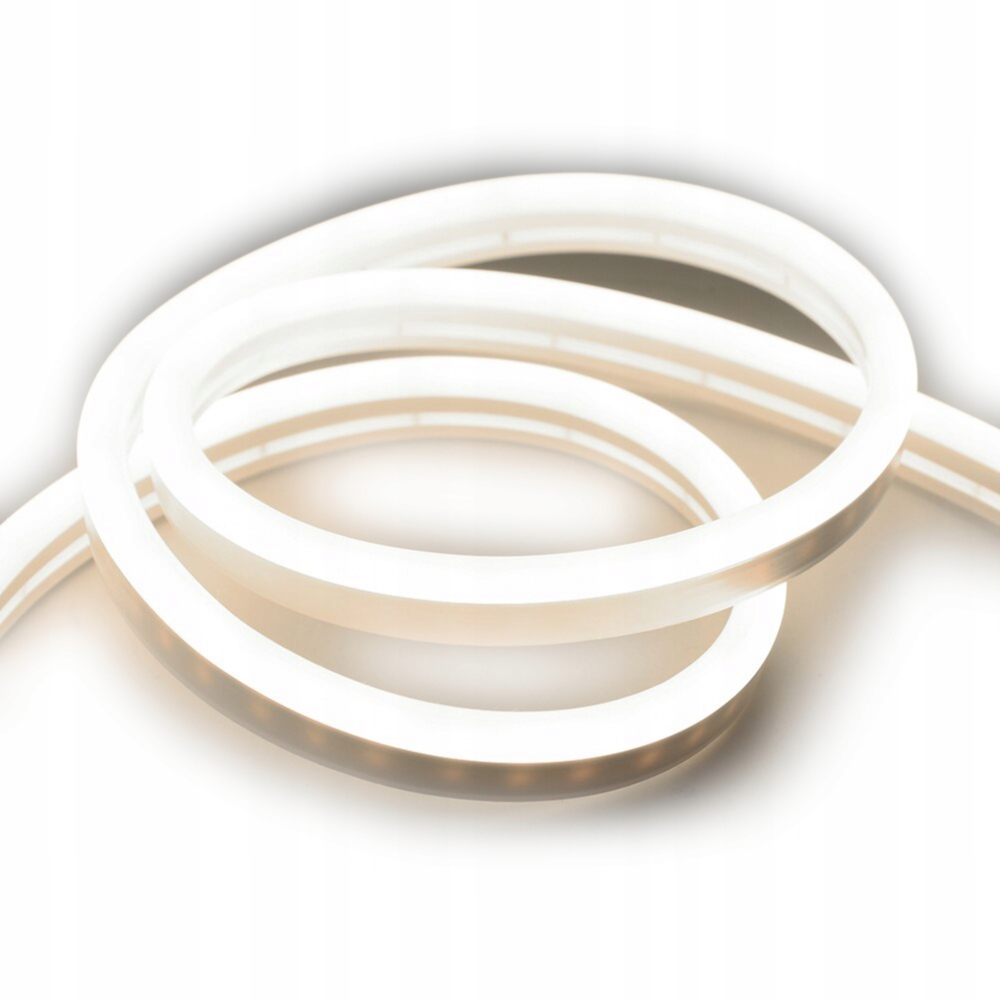
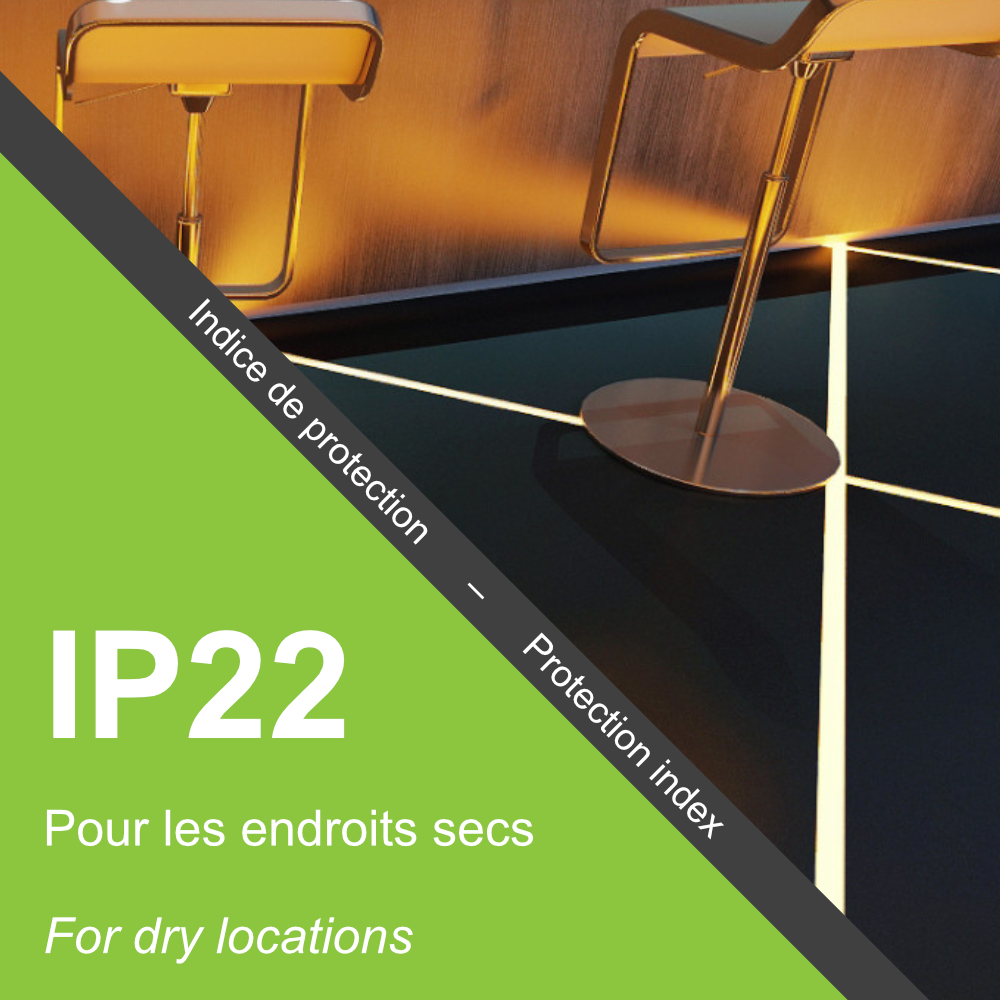
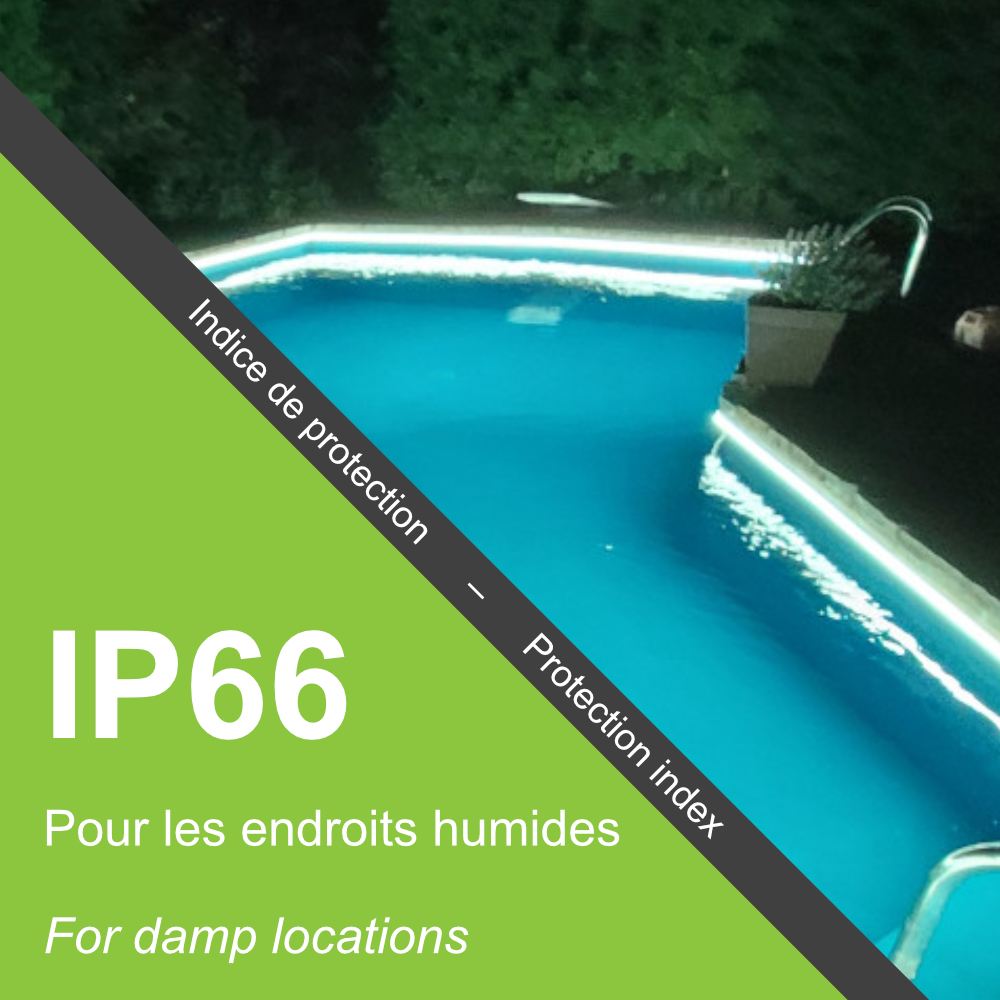
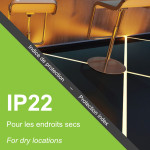
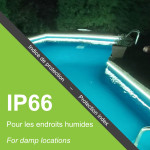
The IP (Ingress Protection) rating indicates the strip's resistance to solid and liquid ingress. IP20: protection against solids over 12mm, no water protection — interior dry use only (under-cabinet, coves, closets). IP44: resistance to water splashed from all directions — bathrooms outside splash zones, garages, sunrooms. IP65: resistant to water jets — covered terraces, outdoor kitchens, wet zones. IP67: temporary submersion up to 1 meter for 30 minutes — pools, rain-exposed gardens, jet-cleaning zones. IP68: continuous submersion — basins and fountains. In Quebec, IP65 strips are recommended for all outdoor applications exposed to precipitation. The silicone coating on IP65 strips also protects against winter condensation.
\n\nCRI: color rendering index
\n\n
CRI (Color Rendering Index) measures how faithfully a light source reproduces the colors of objects compared to natural daylight (CRI 100). A CRI 80 strip is acceptable for general ambient lighting, but it can distort the colors of food, clothing and artwork. A CRI 90+ strip reproduces colors with markedly superior fidelity — essential for kitchen under-cabinets where food is prepared, hair salons, clothing boutiques, art galleries and stores where product presentation is critical. LEDCO systematically recommends CRI 90+ for quality residential and commercial spaces.
\n\nColor temperature and aluminum profiles
\n\n
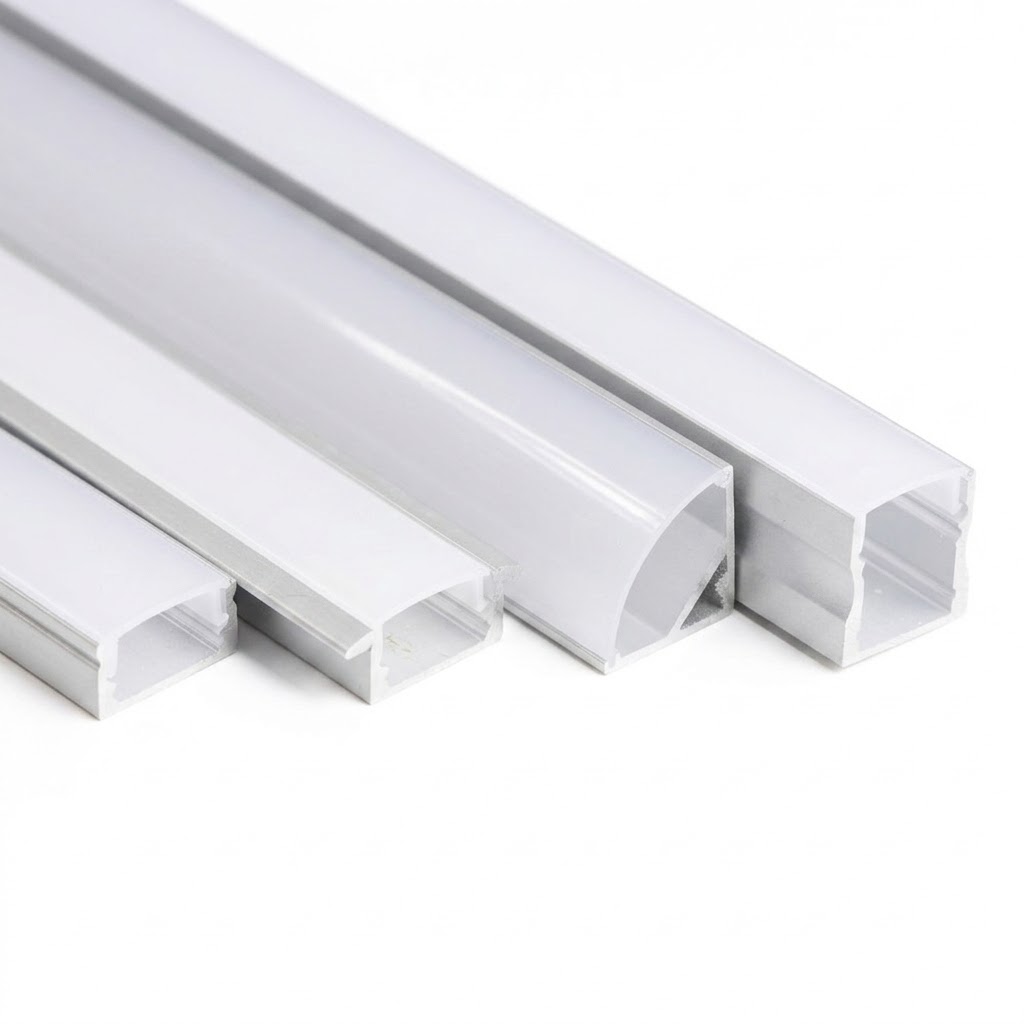
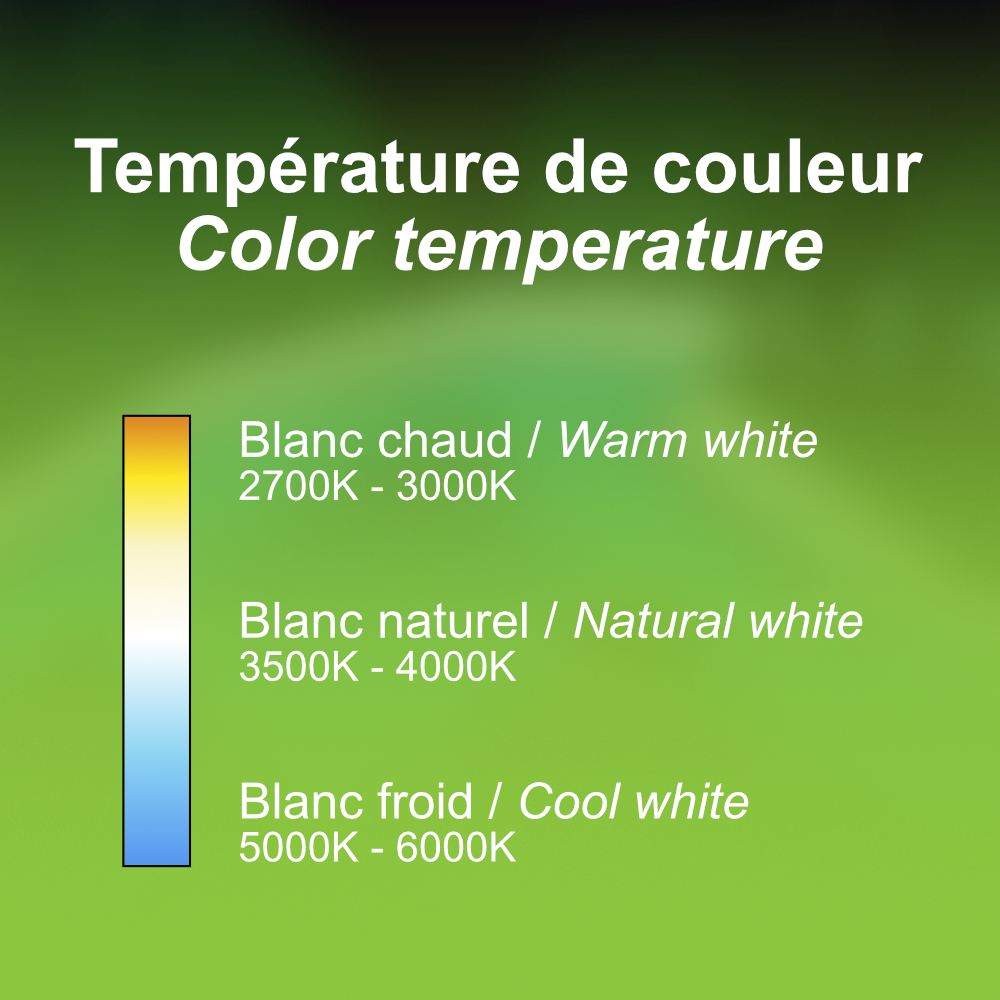
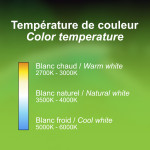
Color temperature in Kelvin (K) defines the tint of white produced by the LED strip. Warm white 2700–3000K: cozy residential ambiance, ideal for living rooms, bedrooms, restaurants and hotels. Neutral white 3500–4000K: balanced, versatile light, suitable for kitchens, bathrooms, retail and offices. Cool white 5000–6500K: bright, stimulating light, recommended for workshops, warehouses, garages and commercial spaces requiring alertness. CCT-adjustable strips allow switching from 2700K to 6500K via a controller, offering maximum flexibility for multipurpose spaces. An LED strip installed without an aluminum profile ages prematurely from accumulated heat, produces grainy unattractive light and offers little mechanical protection. LEDCO's Builder tool on the website allows ordering profiles and strips cut to your project's exact dimensions. Contact our team for personalized advice.
\n\n