


why choose aluminum profiles for your LED strips ?


WHY CHOOSE ALUMINUM PROFILES FOR YOUR LED STRIPS ?
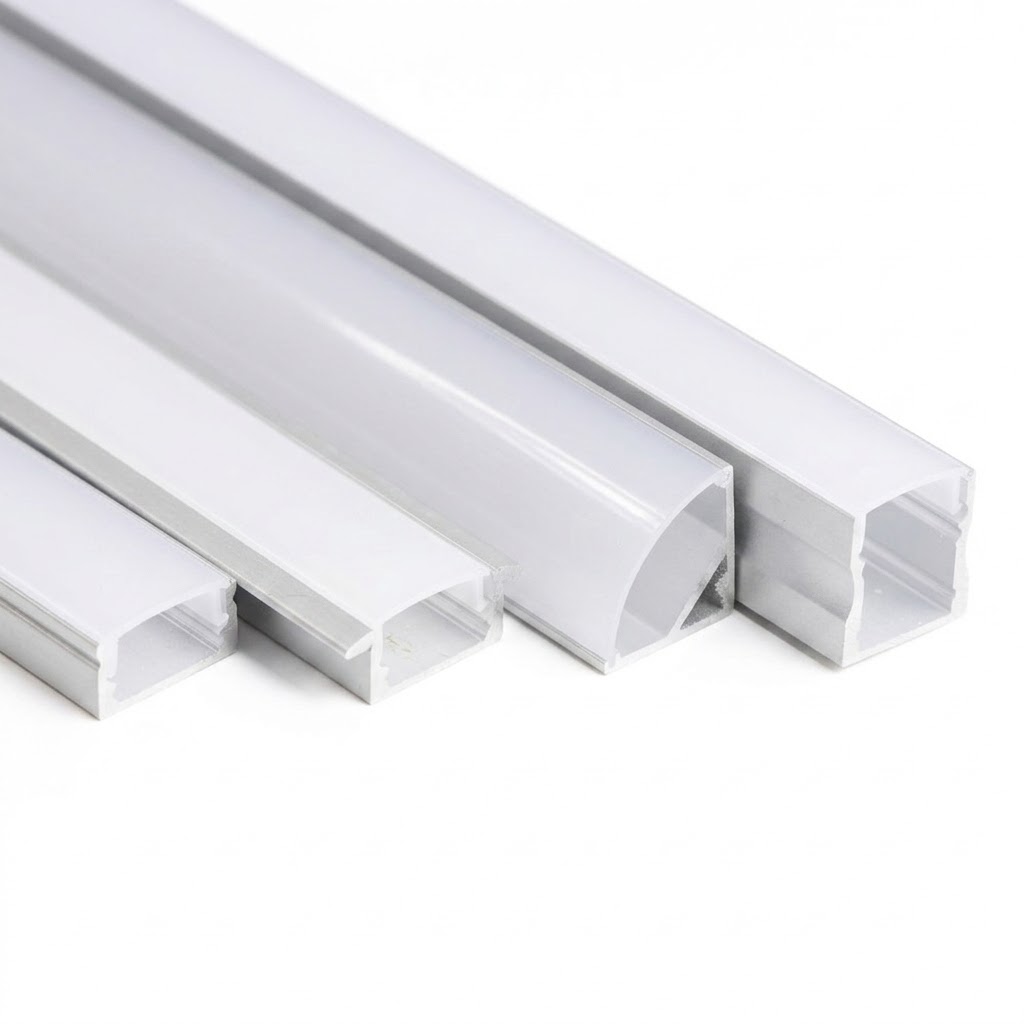
An LED strip installed without aluminum profiles for LED strips works, but it is still just a strip: its light points show, heat builds up and it remains exposed to impacts. The profile turns that bare strip into a finished fixture, and it performs four functions at once: diffusing light, dissipating heat, protecting the strip and providing an architectural finish. LEDCO offers aluminum profiles for LED strips to recess, surface-mount, suspend or fit into corners and coves, cut to the exact length of each project.
The diffuser: from a string of dots to a continuous line
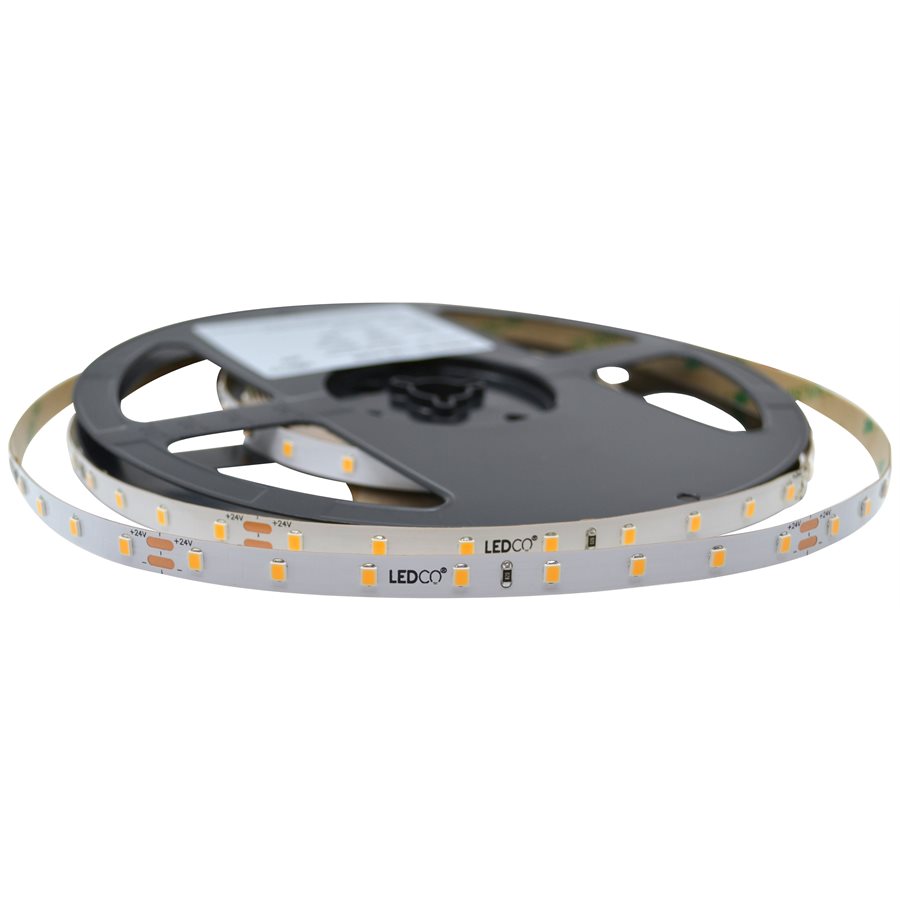
Without a diffuser, an LED strip produces a series of light points separated by small darker areas. Even a high-density strip of 120 LEDs per metre shows this granular effect when seen up close, under a cabinet, in a niche or on a stair tread. The profile's cover spreads light across its whole surface and turns the line of dots into a smooth stroke of light, with the efficiency of LED.
Frosted, satin or clear: choosing the cover
Three cover finishes meet three needs: frosted (milky) for maximum diffusion, satin (opal) for a balance between diffusion and light transmission, and clear for maximum light, with slightly visible points. For most residential and commercial projects, frosted gives the most polished look, regardless of the density of the indoor LED strip chosen.
Dissipating heat: a strip that lasts longer
Heat is the enemy of LED components. As junction temperature rises, luminous efficacy drops and ageing speeds up. A strip stuck directly onto wood, plaster or plastic dissipates the heat from its LEDs poorly, and it ages prematurely. Thanks to its high thermal conductivity, aluminum acts as a passive heat sink: it absorbs the heat from the strip and spreads it along the whole length of the profile. For lighting that must last for years without maintenance, the profile is not an option, it is a necessity.
The recessed profile: a flush finish
The recessed LED aluminum profile fits into a groove routed in wood, plaster or concrete. It sits flush with the surface and becomes almost invisible during the day. It is the preferred choice for stair nosings, bookshelves and dropped ceilings where a perfectly integrated finish is sought. A slim 8 to 10 mm profile is particularly well suited to stair treads.
The surface-mount profile: the fastest installation
The surface-mount LED aluminum profile attaches directly with screws or double-sided tape. It is the fastest installation, ideal under kitchen cabinets, under a bar counter or on display shelving. Its bevelled edges blend cleanly into the space with no abrupt relief.
Corners, coves and suspended: the special profiles
The corner profile mounts on the edge of a wall, a column or a counter and lights at 45° or 90°, a popular effect on kitchen islands, TV units and wall niches. The cove profile, L- or U-shaped, goes at the top of the wall to hide the strip and throw light toward the ceiling, the classic solution for a luminous sky effect in a living room or bedroom. These shapes are found among our special LED aluminum profiles.
Suspended LED aluminum profiles, for their part, create lines of light above a desk, a table or a reception counter. Outdoors, a profile also adds mechanical protection to outdoor LED strips installed under a railing or a cornice.
Which aluminum profiles for LED strips suit which installation
The right profile follows from where the line goes; the strip itself is chosen by room and tone (see how to choose the right LED strip). In short:
- Stair nosing and shelf: slim recessed, flush, invisible by day.
- Under cabinets and counters: surface-mount profile, screwed or taped, quick to install.
- Edge of an island or a niche: corner profile at 45° or 90°.
- Top of the wall: L- or U-shaped cove profile, light toward the ceiling.
- Above a table or a desk: suspended profile, in a continuous line.
Custom cutting and connectors
At LEDCO, profiles are cut to the exact length of your project, to the millimetre. With the Custom Builder, you order exactly what you need, with the diffuser covers, end caps and mounting clips, rather than buying standard lengths to recut on site. The compatible connectors in our accessories and connectors allow a clean, solder-free connection. For a whole project described zone by zone, see also custom LED strips.
Technical tips for aluminum profiles for LED strips
Measure the finished line, not the strip. The profile runs from one end of the cabinet or step to the other; a line that stops before the edge shows right away.
Plan the groove before installation. A recessed profile sits in a channel prepared by the cabinetmaker or the plasterer; it is drawn from the width and depth of the profile.
Frosted cover by default. It hides the dots in almost every case; clear is chosen only when the source is never seen head-on.
Aluminum does not bend. For a curved line, the strip goes on its own in a groove cut into the wood; the profile takes over on the straight runs.
Stick the strip onto bare aluminum. Direct contact with the metal is what dissipates the heat; paint or a thick adhesive between the two cancels the effect.

Aluminum profiles for LED strips FAQ
Do you really need aluminum profiles for LED strips?
For a trial or a temporary setup, no. For lighting that has to last and look finished, yes: the profile hides the dots, draws the heat away, protects the strip from impacts and gives a clean line.
Which LED strip cover should I choose: frosted, satin or clear?
Frosted in almost every case: it erases the dots and gives the most uniform line. Satin lets a little more light through with still good diffusion. Clear is for when the source is never seen head-on and every lumen counts.
Which recessed LED profile for a staircase?
A slim 8 to 10 mm recessed profile, set in a groove under the stair nosing or in the riser. It sits flush with the wood and disappears by day. The groove is prepared before installation, to the width of the profile.
Is there a flexible profile for LED strip?
Rigid aluminum does not follow a curve. For a rounded shape, the strip is installed on its own in a groove machined into the wood, which then plays the role of the profile, and the profile takes over on the straight runs.
Can I order a profile already cut to length?
Yes, that is the normal use of the Custom Builder: you enter your lengths, and the profile arrives cut, with cover, end caps and clips, the strip already inserted and soldered if you wish. Unsure which profile to pick? Contact our team.