


How many ceiling recessed lights — and at what spacing?
For residential CEILING recessed lights (kitchen, living room, bedroom…). Enter your room: quantity, spacing, recommended lumens and layout plan — the light circles must overlap for even lighting.
DLS and DLX (40°): the light circles must overlap for even, designer-grade lighting — about one light per ceiling-height of distance, 2.5 ft from the walls. Example: 12 × 12 ft room, 8 ft ceiling → 4 lights, 7 ft apart, 2.5 ft from the walls.
Simple lumen rule for residential ceilings: 8 ft ceiling → about 500 lm per fixture; 9 ft → about 600 lm. This calculator is for residential rooms (kitchen, living room…) — not for high bays on a 20 ft warehouse ceiling.
The pale circles show each light's coverage — they overlap for uniformity. General estimate: obstacles, beams and furniture change the plan; send us your layout and we will fine-tune it.
LEDCO models: DLS and DLX = 40° beam; DLF = 120°. White, black and stainless finishes; DLX in 3 or 4 in, round or square.
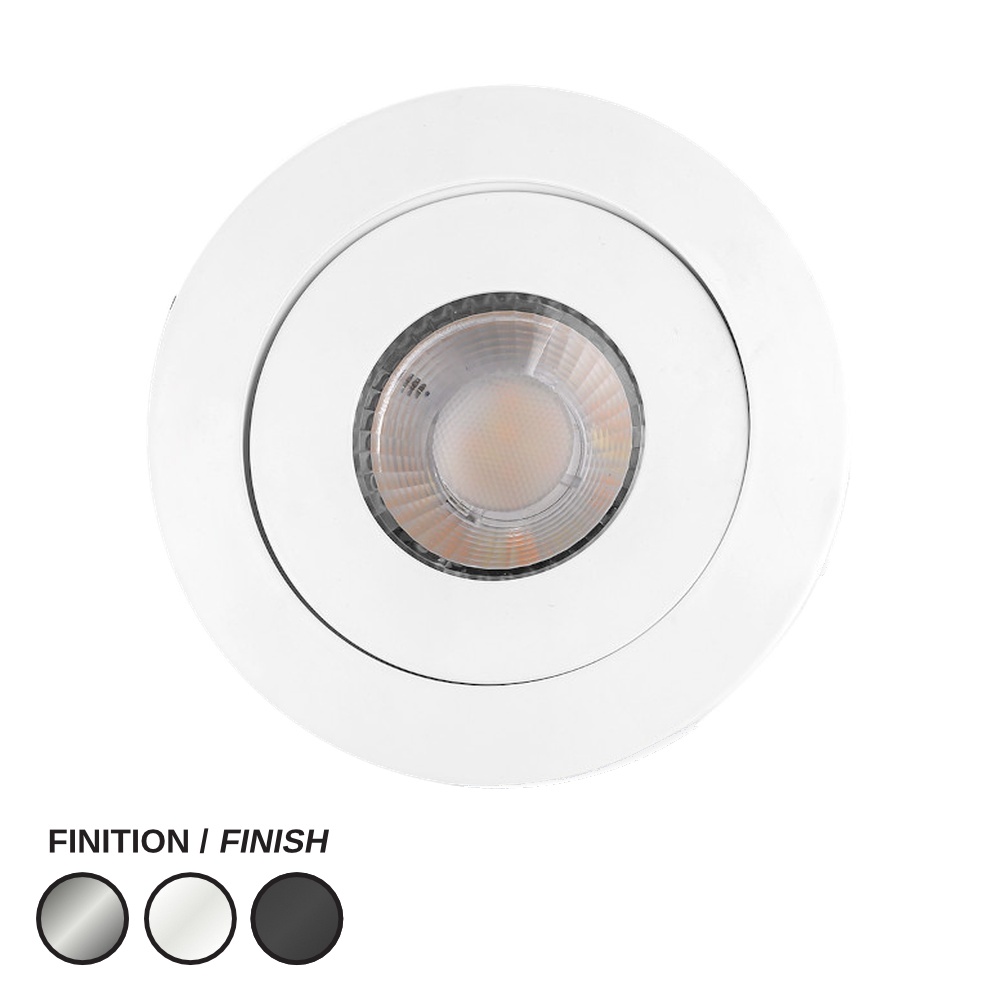 DLS (40°)
View the product →
DLS (40°)
View the product →
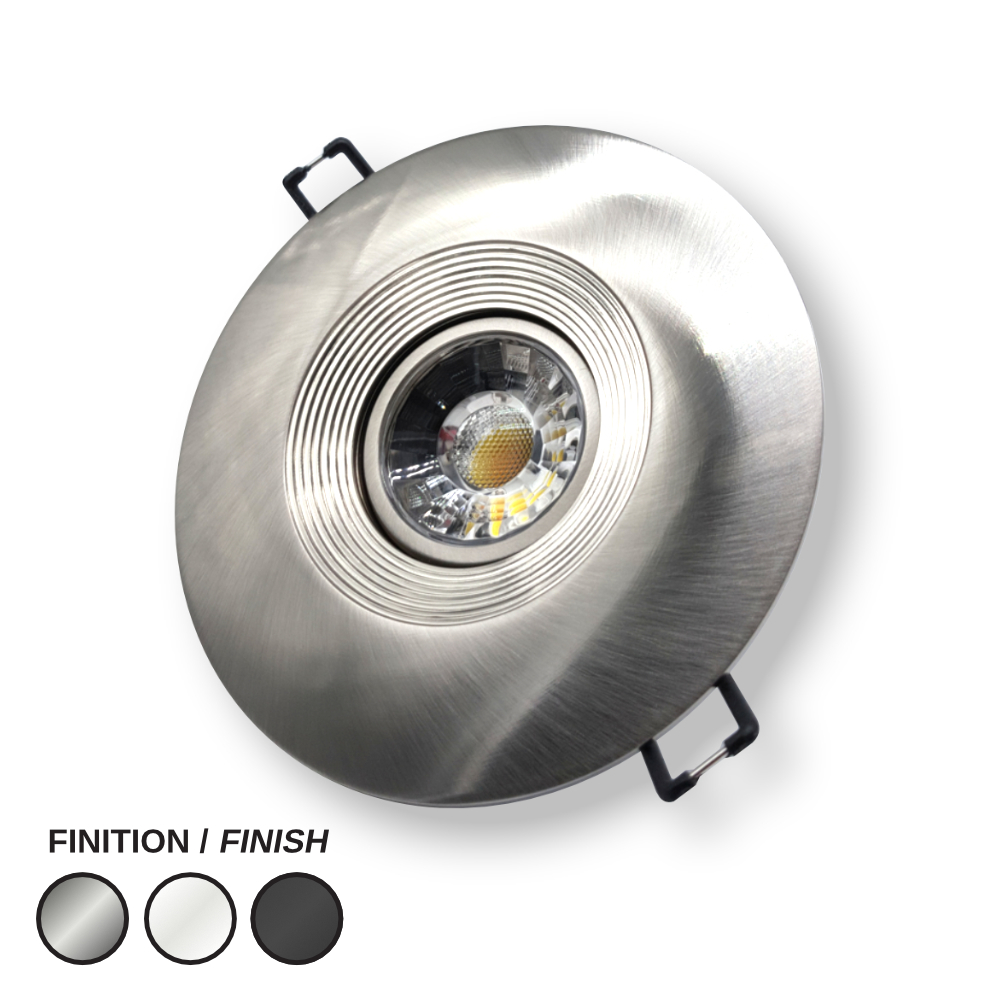 DLX round (40°)
View the product →
DLX round (40°)
View the product →
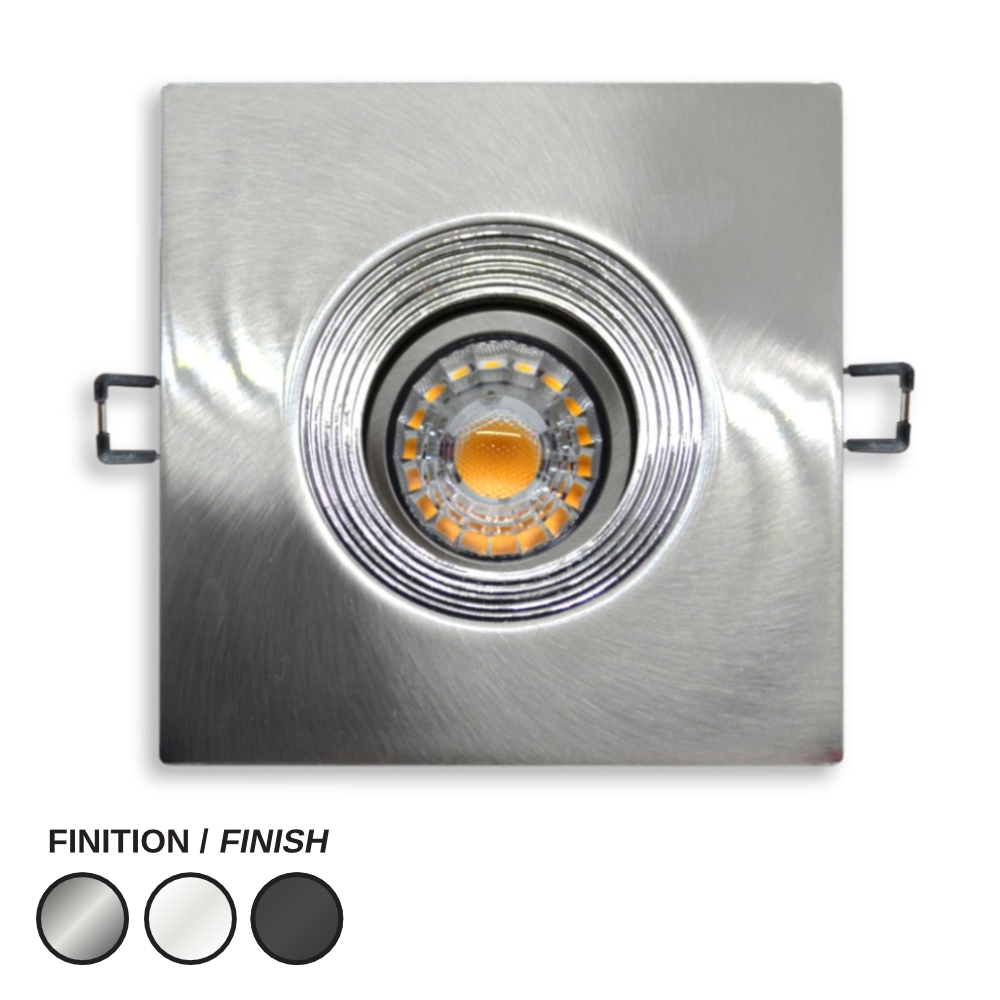 DLX square (40°)
View the product →
DLX square (40°)
View the product →
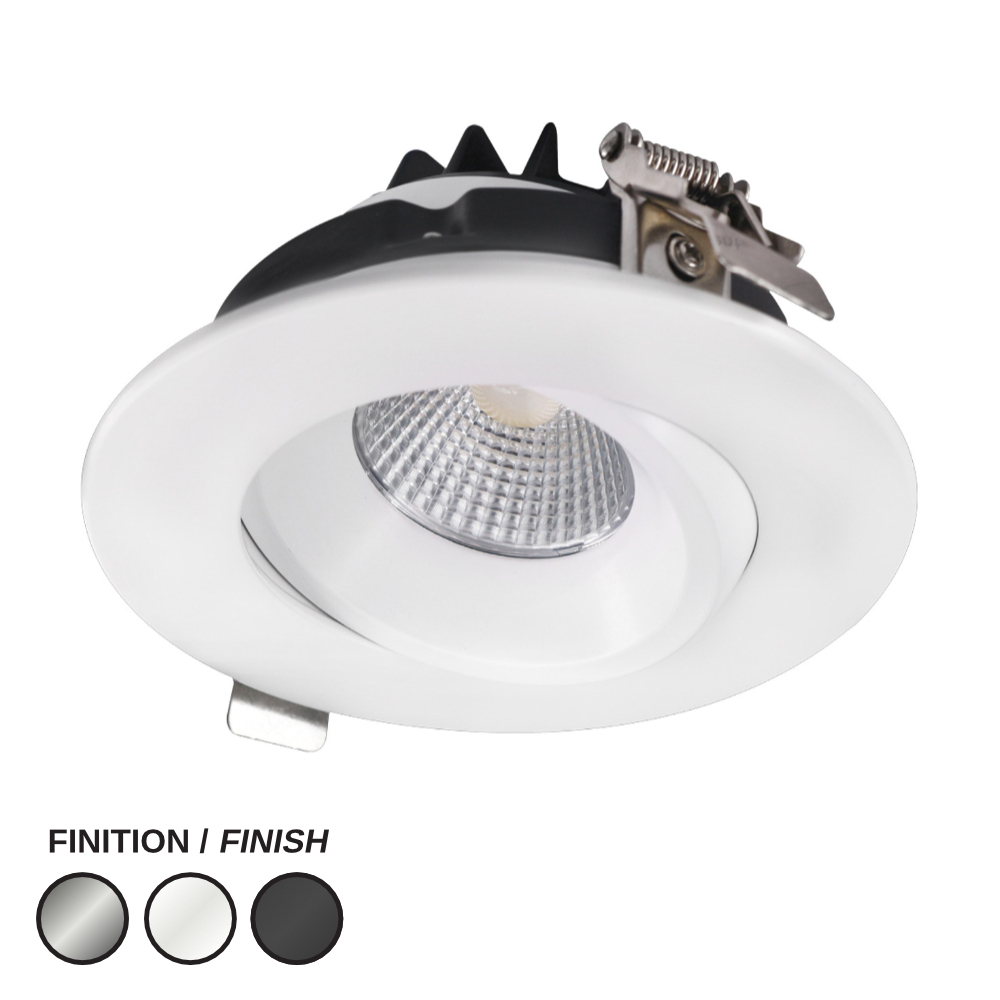 DLS-HP (9 ft +)
View the product →
DLS-HP (9 ft +)
View the product →
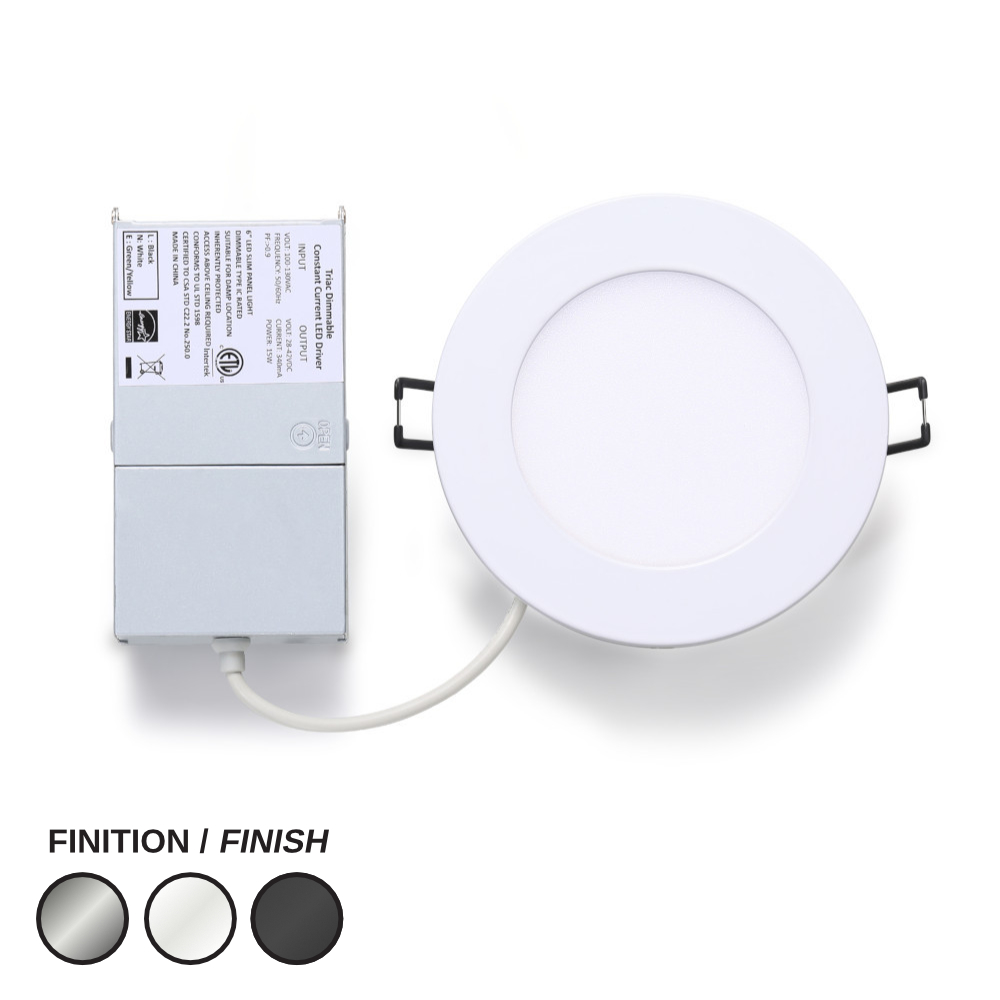 DLF flat (120°)
View the product →
DLF flat (120°)
View the product →
The beam angle: the #1 criterion when choosing a recessed light
Every recessed light projects its light as a cone, and the opening of that cone — the beam angle — is set by the fixture's optics at the factory. Our DLS and DLX models produce a 40° beam; the DLF produces a 120° beam. That single specification determines where the light actually goes, which makes it the first criterion to consider — before wattage or lumens.
The difference in angle comes from how the fixtures are built. The traditional recessed light — the format that has existed for more than 50 years and remains the industry standard — aims its light source directly downward, producing the classic 40° beam. The DLF is built differently: its LEDs are mounted around the rim of the fixture, and their light is diffused toward the centre through a diffuser panel. That indirect lighting is what creates its very wide 120° beam — a soft, even glow with no hot spot, but one that scatters in every direction.
To picture the effect of the angle, think of a garden hose. On the wide fan setting, the water covers a large area but reaches the ground with little force; on the concentrated jet, the same water travels farther and lands with real pressure. Light follows the same principle: at equal power, a 120° beam spreads the light over a very large area, so each spot only receives a fraction of it, while a 40° beam concentrates that light and delivers strong, deliberate illumination on the counter, the island or the table you want to highlight.
The tighter beam also improves visual comfort. A very wide beam remains visible from almost anywhere in the room: the eye perceives the light source itself, which creates glare. With a 40° beam, the source stays discreet in the ceiling — you see the effect of the light on the surfaces, not a bright disc above your head.
In an open-concept space where the kitchen, dining room and living room share the same ceiling, the beam angle also defines your lighting zones. Overlapping 120° beams spill from one zone into the next, making it impossible to dim the living room for a movie while the kitchen stays lit. With 40° beams, each zone keeps its own pool of light and can be controlled independently.
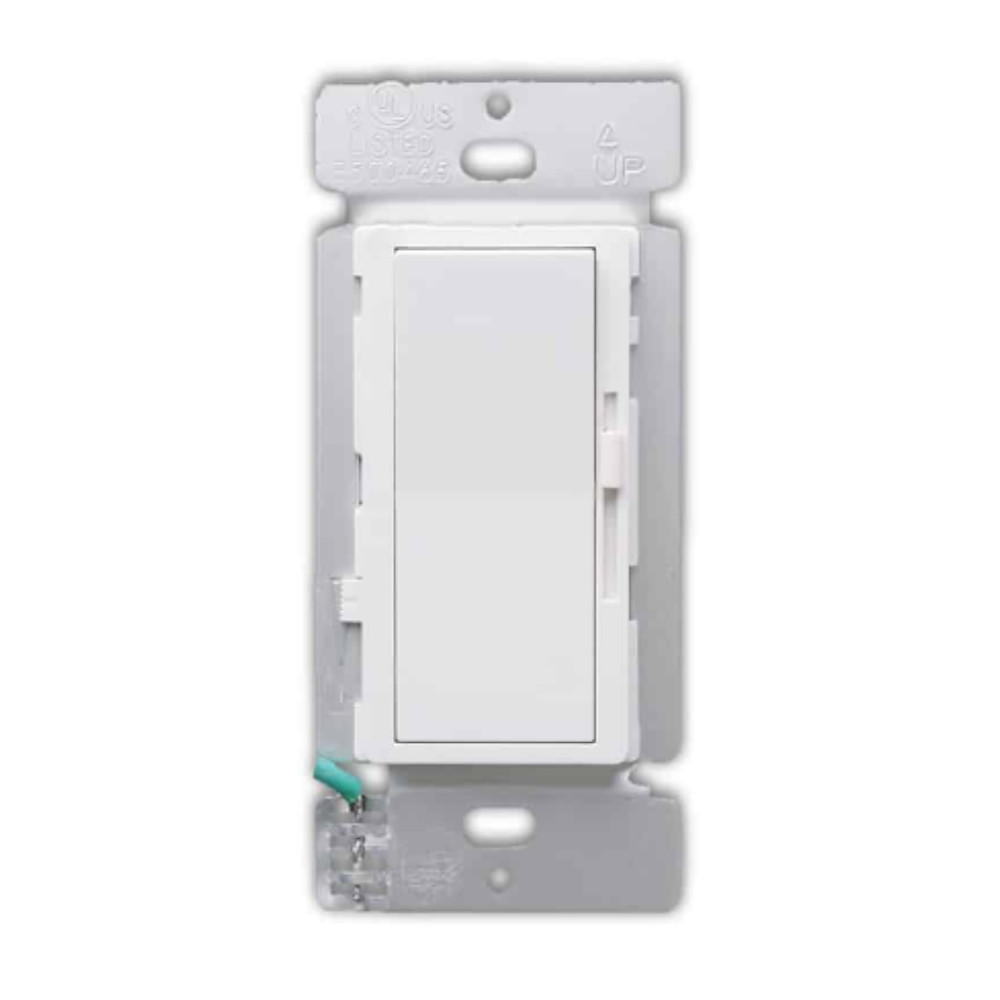
One important clarification: a dimmer does not change any of this. Dimming a recessed light adjusts its intensity — the amount of light — never its beam angle, which is fixed by the optics. A dimmed 120° fixture is still a wide beam lighting the whole area, only more faintly. The right angle is chosen at purchase; the dimmer then fine-tunes the ambiance.