


Custom LED Strips: Personalized Lighting for Your Projects


CUSTOM LED STRIPS: PERSONALIZED LIGHTING FOR YOUR PROJECTS
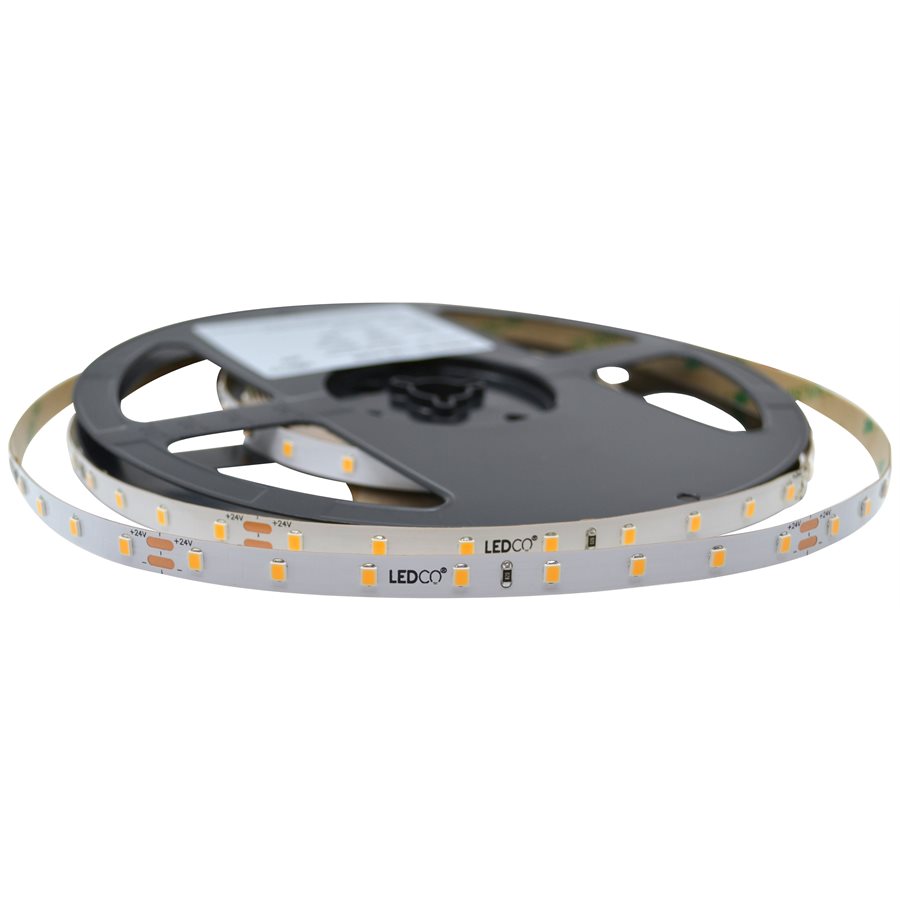
Custom LED strip lights are no longer reserved for architect-designed projects. With LEDCO's Custom LED Builder, a homeowner, a contractor or a designer orders LED strips and aluminum profiles cut to the exact length of the project, in 12 V or 24 V, with the right IP rating and the right diffuser, and receives them ready to install. You enter your lengths; we cut, solder and assemble in our shop.
How the Custom LED Builder works
The path is short. You first choose the LED strip family: warm white, neutral white, cool white, RGB, RGBW or adjustable white (CCT). You specify the location, dry, damp or outdoor, then the length of each segment. For an 87 cm kitchen cabinet, you enter 87 cm, not 90 or 100: that is the whole point of custom LED strip lights. The Builder totals the watts, picks the transformer with 20 % headroom and draws up the complete parts list before you order.
Strip alone or strip in a profile: the Builder's two modes
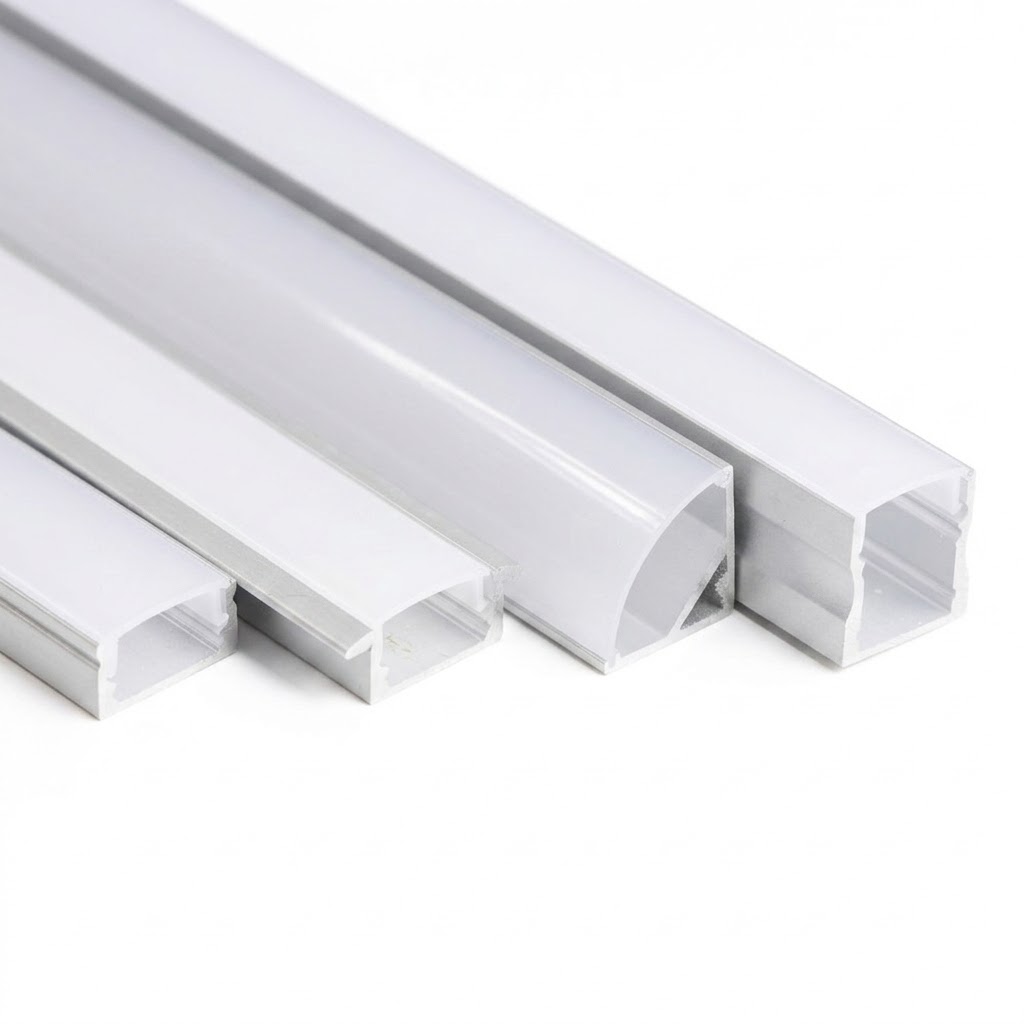
First decision: the strip alone, or the strip already mounted in an aluminum profile. In strip mode, you receive lengths cut and soldered, with their lead, ready to stick into a groove or a profile you already have. In profile mode, the shop cuts the profile, inserts the strip, fits the end caps and tests the assembly: you receive a finished fixture, ready to screw in place. The profile adds a diffuser that erases the dots, protects the strip and dissipates its heat; the strip alone follows a curve. Both can be mixed in the same project.
Kitchen: lengths that never come out even
The kitchen is the number one application. Every cabinet section has its own length, inside corners call for a joint, and the total load has to be calculated so the power supply is not overloaded. With the Builder, you order in one go every segment at the exact length of your cabinets, the matching profiles, the end caps and the calculated transformer: nothing to cut on site, nothing to adapt. For placement and colour choices, see our page on under-cabinet LED lighting.
Stairs, cove and niche: several zones in one project
A staircase means identical segments fed from a single source; a cove, one long line in several sections; a niche, a short segment that has to land exactly. The Builder accepts as many zones as you want in a single order, for example four sections under the cabinets, three in the cove and one in the niche, and it checks whether one transformer is enough or several are needed. Our page on LED stair lighting covers the step-by-step installation.
Dry interior, damp room or outdoors: choosing the right IP rating
The same strip does not go everywhere. IP20 suits dry interiors: cabinets, shelves, headboard, cove. IP65 is required in a damp room or under a covered outdoor area. IP67 is made for exposed outdoor use: deck perimeter, soffit, low wall. The Builder only offers combinations compatible with the chosen location. Our indoor LED strips and outdoor LED strips can also be ordered by the roll if you prefer to cut them yourself.
Flex neon and food-grade strip: the special cases
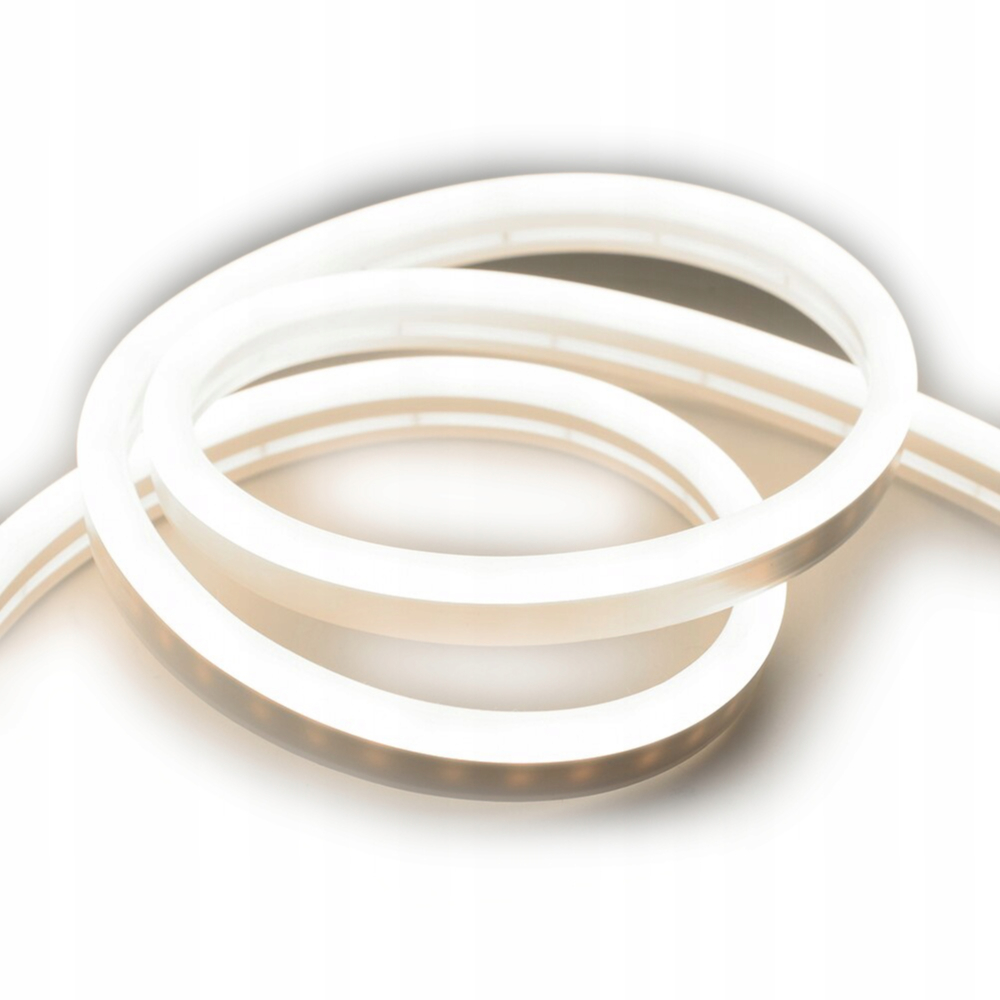
When the line has to turn, flex neon LED takes over from rigid strip: the 3 × 6 mm side-bend flex neon draws tight curves and lettering, the 6 × 6 mm top-bend flex neon follows a ceiling or furniture outline. For a meat, produce or bakery counter, the food-grade 16 W/m IP66 LED strip is designed to show food at its best and withstand washing. These products are ordered by the roll; our team helps you fit them into the project.
What the Builder adds to your list
This is what people forget when they price a project themselves. From your lengths, the tool adds:
- The transformer: it totals the watts of each zone and picks the model that exceeds that total by at least 20 %, because a power supply running at its maximum heats up and ages fast.
- The end caps: for each length of profile, one cap drilled for the lead and one solid cap.
- The wire and solder joints: every strip cut gets its connection soldered in the shop, nothing to improvise on site.
- The mounting brackets: calculated from the total length, or replaced by double-sided tape if you prefer.
Technical tips for successful custom LED strip lights
Measure end to end, to the inch. A line that stops short of the end of the cabinet shows right away; it is the most common mistake.
Keep 20 % headroom on the power supply. The Builder applies it automatically; if you assemble it yourself, do the same math.
The transformer goes somewhere dry and ventilated. Above a cabinet, in a storage space or a junction box made for it, never shut in without air.
Prefer 24 V for long sections. 12 V remains practical for short lengths; on a long cove, 24 V keeps the light even from one end to the other.
When in doubt, write to us before ordering. We go over your lengths and choices with you; a custom build is cut to your dimensions.
An example of a residential project in custom LED strips is in our accomplishments. For a commercial or multi-zone project, contact our team: we get it right with you the first time.

Custom LED strip lights FAQ
Can I order a precise length, not a multiple of a roll?
Yes, that is the principle of the Builder: you enter the length of each segment, and the shop cuts and solders to that measurement. No need to round up to a roll or join pieces on site.
Is the transformer included with custom LED strip lights?
The Builder calculates it and adds it to your list with 20 % headroom, so nothing is missing on installation day. If you already have a power supply, tell us: we check that it suits the total load and the type of strip chosen.
What is the difference between a 12 V and a 24 V strip?
Both are low voltage and dimmable. 24 V keeps the light even over longer sections, which makes it the usual choice for coves and long cabinet runs; 12 V suits short lengths. The Builder only offers compatible combinations.
Can I see the full parts list before ordering?
Yes. The Builder shows you the complete parts list, from the strip to the end caps, before any order. If you are unsure about a length or a profile, we validate it with you.