


LED under cabinet lights


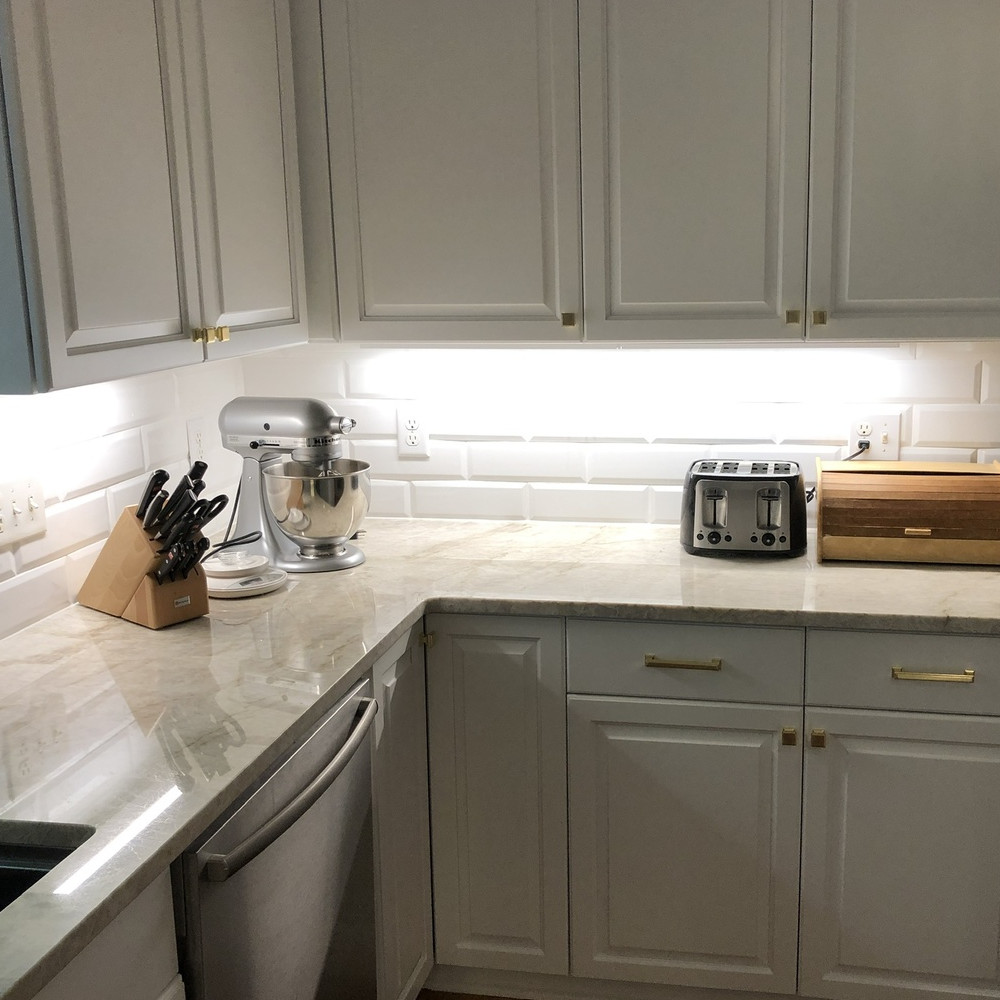


LED UNDER CABINET LIGHTS
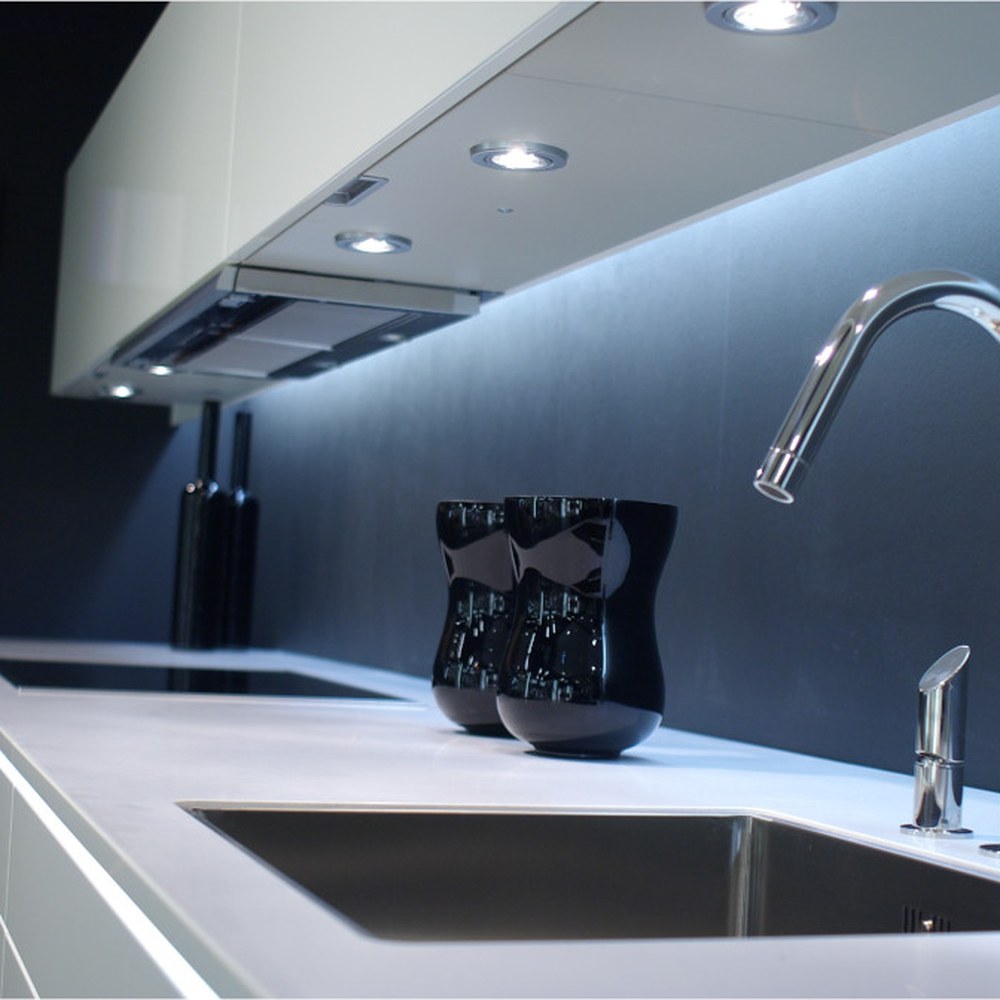
Under cabinet lighting is the upgrade that changes a countertop the most: clean light across the entire work surface, with no dark spots, no heat and no bulbs to replace. LEDCO supplies the complete system — aluminum profile, strip, power supply and controls — in standard lengths or assembled to the exact size of your cabinets. The #86 profile is our default choice, and we ship across Canada.
The four parts of kitchen under cabinet lighting
A good under cabinet installation comes down to four components. How well they work together is what separates a clean line of light from a makeshift setup:
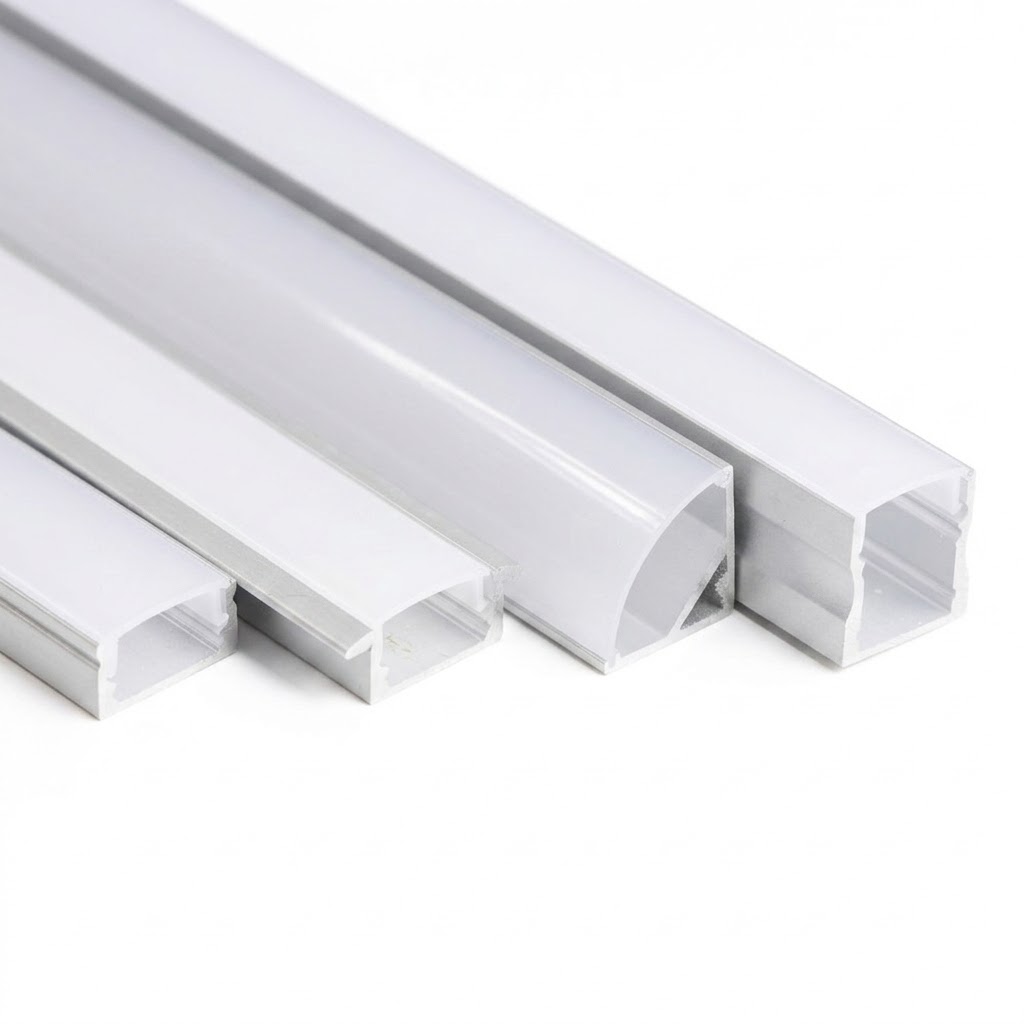
- The aluminum profile: it holds the strip, draws its heat away and hides the diodes behind a diffuser.
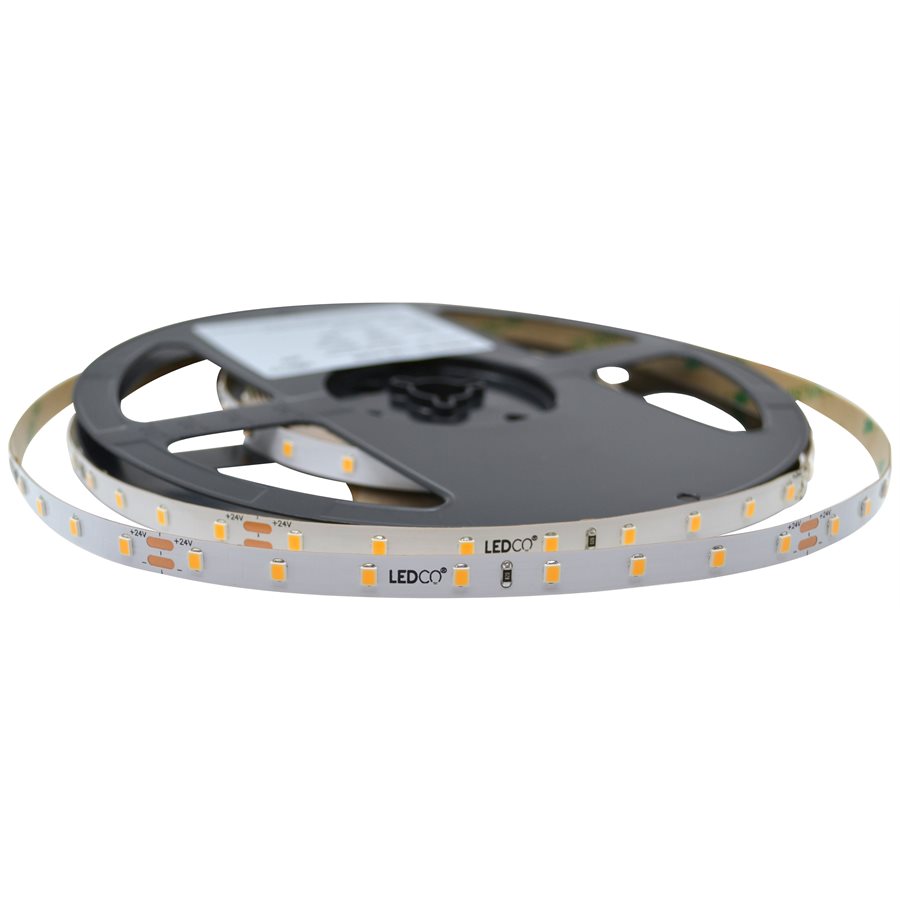
- The LED strip: in 12 V or 24 V, its wattage per metre decides whether it lights a work surface or adds an accent.
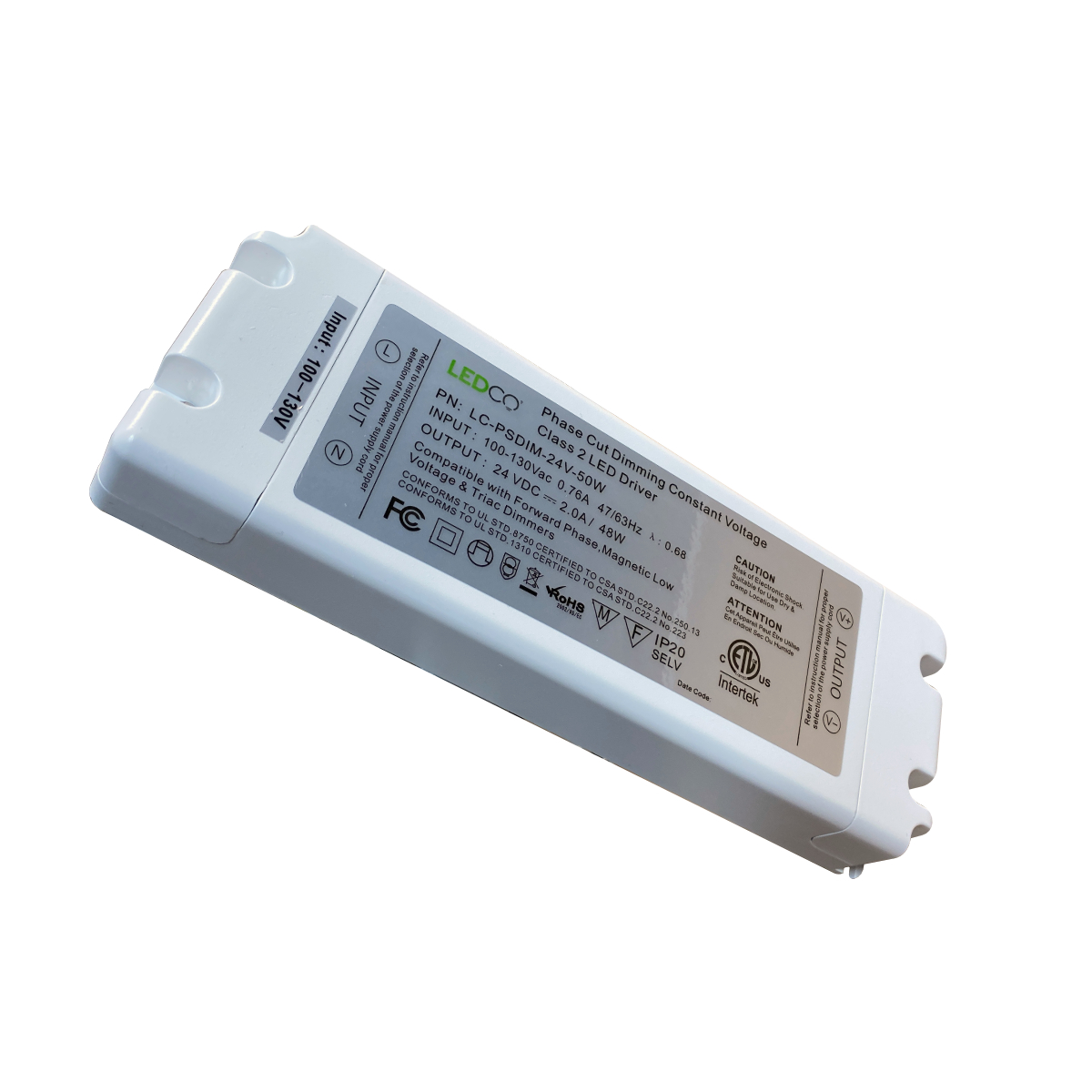
- The power supply: it converts the 120 V from your home into 12 V or 24 V DC.
- The controls: a dimmer, remote or sensor, placed between the power supply and the strip.
#86 or #85 profile: which one goes under the shelf?
The #86 profile is the one we recommend under kitchen cabinets. Its flat, low body fits under the bottom shelf of the cabinet and is virtually invisible from standing eye level. It can be screwed on as a surface mount or recessed into a groove machined in advance, and its frosted diffuser produces a uniform line with no visible LED dots. The #85 profile, shallow and discreet, screws under the cabinet with no machining at all. Both accept a 12 V or 24 V strip and a frosted or clear diffuser.
The custom builder: every cabinet section at its own length
Few kitchens have cabinets that are all the same width: 36 inches on one side, 24 on the other. In our custom design tool, you enter the measurement of each section; our shop cuts the profile, inserts the strip and ships you a fixture ready to mount, with its power connector. No cutting or soldering on site. The tool takes no payment: it sends you a detailed quote, which our team can review with you.
Under cabinet LED strip: 12 V or 24 V, and how many watts per metre
For a work surface, an LED strip at 8 to 12 W/m in 24 V delivers ample, even light; for accent lighting, 4 to 6 W/m is enough. 24 V is recommended once a run exceeds 2 m: it limits voltage drop and keeps the same brightness from the first to the last centimetre. 3000 K suits wood or warm-white kitchens, 4000 K gives crisp light for food prep, and a tunable white (CCT) strip does both.
The power supply: a simple calculation, with headroom
Add up all the strips, then choose an LED power supply at least 20% more powerful. Example: three 60 cm sections at 8 W/m give 3 × 0.6 × 8 = 14.4 W, so you need 18 W minimum, and the 24 W dimmable LED power supply does the job. Our power supplies are certified and compact: they tuck into the upper cabinet or the one above the range hood. For a large kitchen, our dimmable LED power supplies go up to 300 W.
Dimmer, remote or sensor: controlling the counter light
With a fixed-white strip, the 9-24V LED dimmer switch is all you need to set the brightness. The R21 remote and receiver kit controls up to four zones of white from across the room, and a CCT remote adjusts both brightness and colour temperature on a CCT strip. A 12-24V movement detector turns the line on as you approach, handy when your hands are full. If the kitchen opens onto the living room, an RGBW strip and its controller add colour.
Technical tips for under cabinet LED lights
Measure the inside of each section. What counts is the length under the shelf, not the cabinet face.
Switch to 24 V beyond 2 m. In 12 V, keep each run under 2 m to avoid a drop in brightness at the end of the line.
Multiply the total wattage by 1.25. That is the safety margin to give the power supply, whatever the size of the kitchen.
One colour temperature end to end. Choose 3000 K for ambiance, 4000 K for a working kitchen, or a CCT strip for both.
Match the controls to the strip. A dimmer for fixed white, a CCT controller for tunable white, an RGB controller for colour.
To see the result, our accomplishments show a kitchen fitted with the recessed #86 profile. To choose the profile, strip and power supply for your lengths, contact LEDCO: we will go over your plan with you.

Under Cabinet Lighting FAQ
How do I install an LED strip under a kitchen cabinet?
The easiest way is to start with a pre-assembled profile: screw it under the shelf, connect each section to its connector, then run the lead to the power supply hidden in a cabinet. With a bare strip, you have to cut it at the marked points, connect each end and set it in a profile to hide the diodes. If your cabinets come in several lengths, the custom builder saves you all that cutting.
Can under cabinet lighting be hardwired to 120 V, with no plug?
Yes: the power supply connects to your home's 120 V and converts it to 12 V or 24 V for the strip, which stays low voltage under the cabinet. The power supply hides in a nearby cabinet. For a permanent connection, have an electrician do the wiring.
Strip or puck lights: which under cabinet lighting should you choose?
For the work surface, a strip in a profile wins almost every time: it gives a continuous line. LED puck lights have a concentrated beam that leaves shadows between fixtures over a long run. Keep them for a short section or for accent lighting; they install by drilling or with adhesive.
Frosted or clear diffuser: which should I pick?
Frosted gives soft, even light and hides the LED dots even when you see the profile at an angle, from a table or a breakfast bar. Clear lets through more direct, brighter light. The #85 and #86 profiles accept either one.