


Media Wall LED Lighting




MEDIA WALL LED LIGHTING
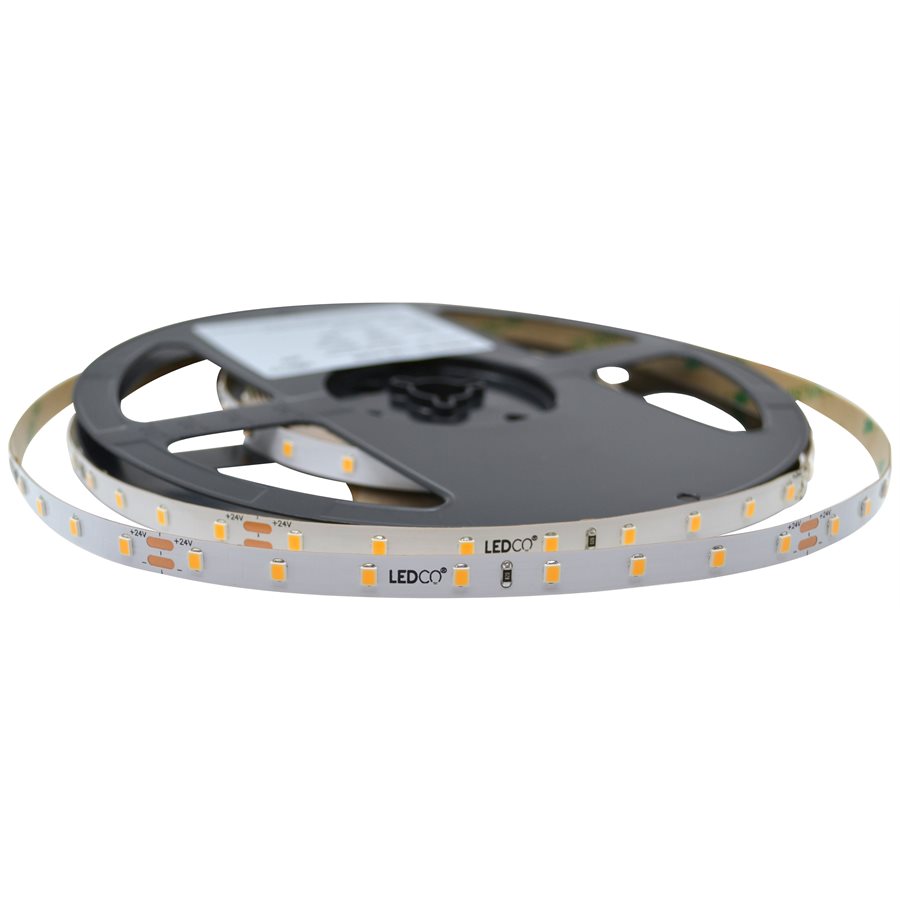
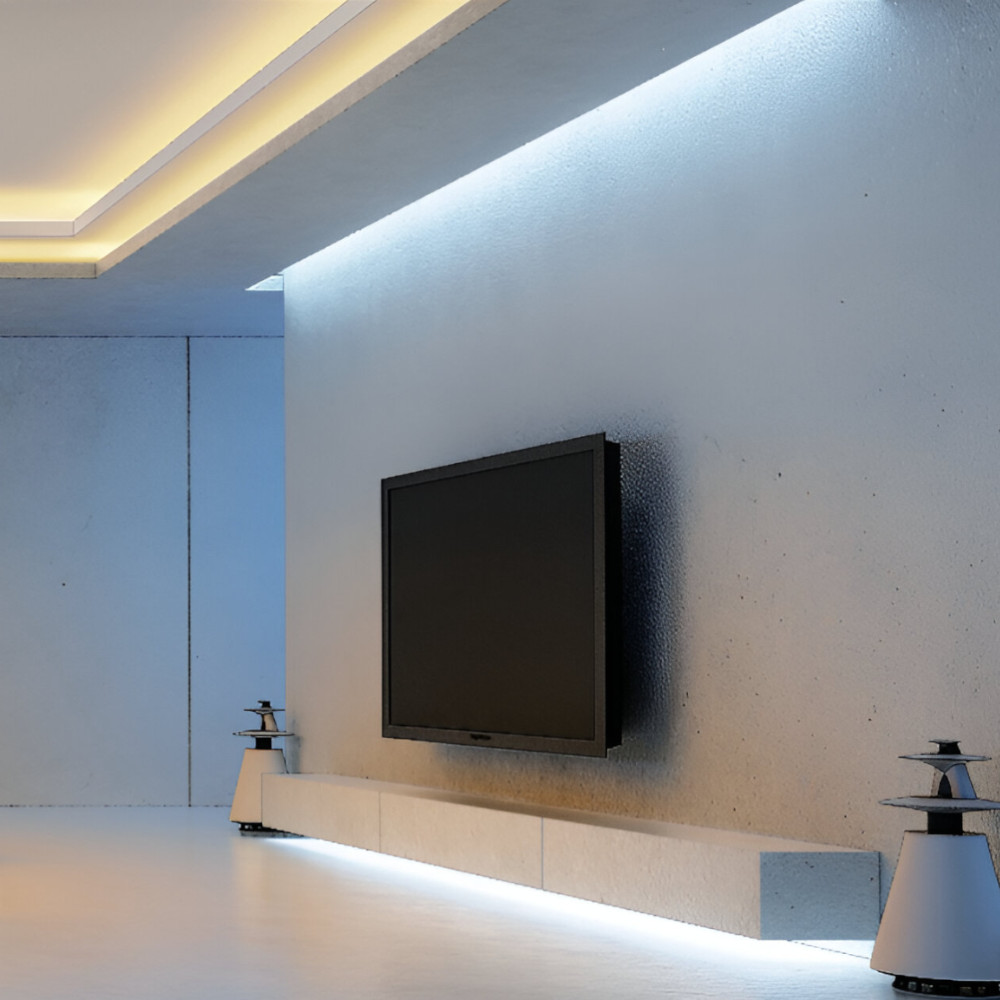
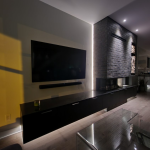
Well-planned media wall LED light turns the unit into the focal point of the living room: the TV, the open shelves and the niches read as one composition, instead of a big dark rectangle around an overly bright screen. LEDCO supplies everything it takes: indoor LED strips, aluminum profiles cut to the length of each shelf, cabinet fixtures and controllers. A halo in 3000 K warm white behind the screen and a strip with a CRI of 90 or more under the shelves bring out the wood, concrete or lacquer of the unit.
Bias lighting: an indoor LED strip behind the TV
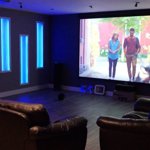
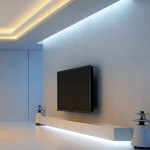
Bias lighting is an LED strip mounted on the back of the TV and aimed at the wall. When the screen is the only light source, the eyes keep adjusting between the very bright image and the very dark room. A halo behind the screen reduces that contrast and makes a long movie more comfortable. An indoor LED strip attached around the back of the set, 5 to 10 cm from the edge, is all it takes.
In 3000 K warm white, at 20 to 30% of full power, the halo stays discreet. An RGBW strip switches from white to colour for a sports night. Either way, plan an outlet behind the TV when the unit is built: that is where the power supply and the wires hide.
Where media wall LED light goes
The secret of a successful LED media wall: you never see the source, only the surfaces it lights. Each part of the unit has its own layer of light:
- Behind the screen: the bias lighting halo, in warm white or colour.
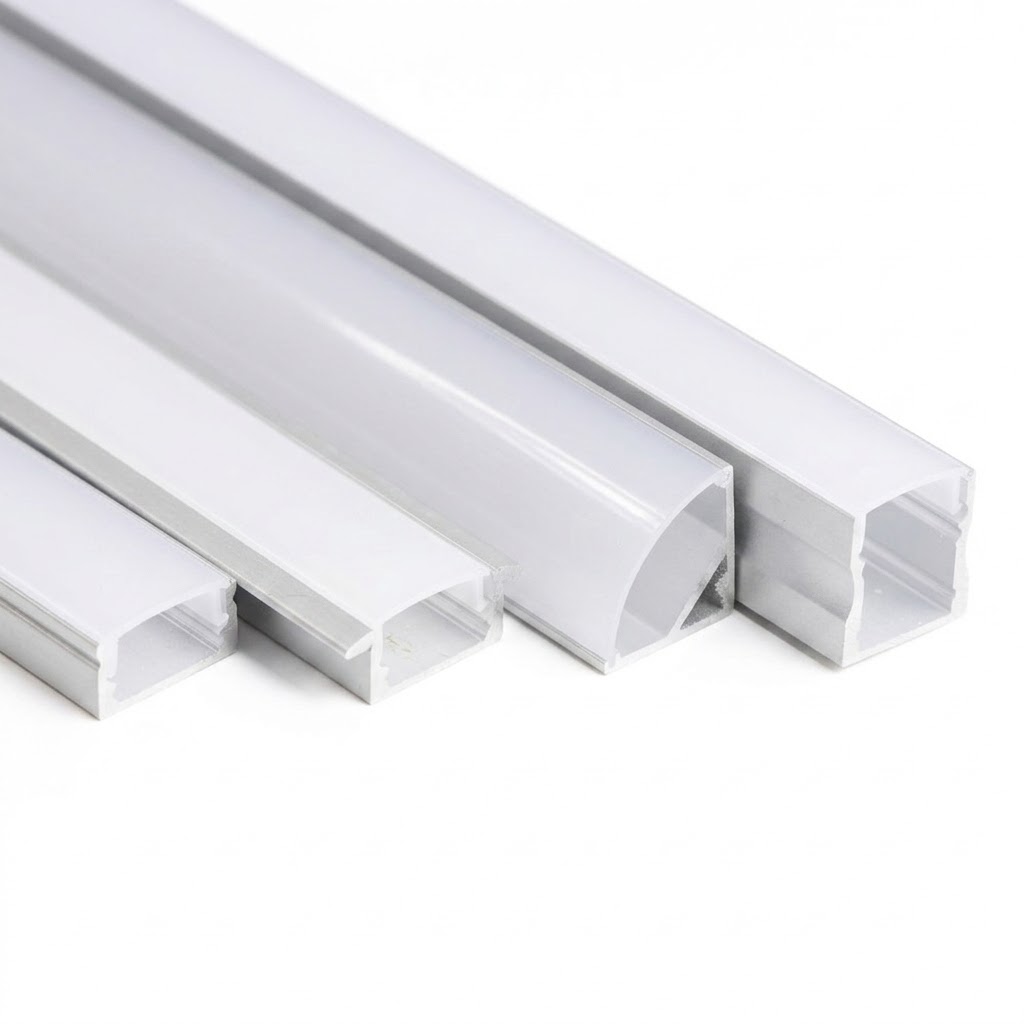
- Under the open shelves: a slim profile with a strip, so the light flows down onto the objects.
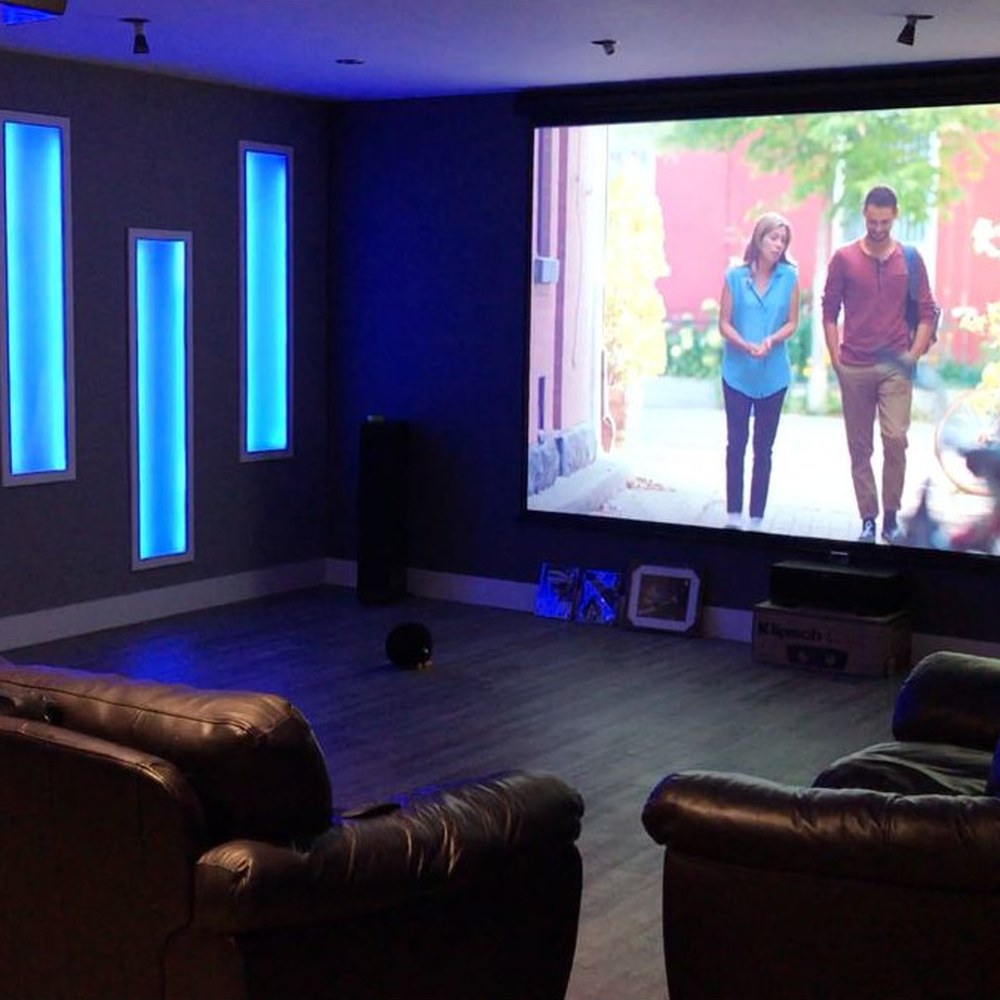
- Inside the niches: a U-profile or an LED puck light, for a display-case effect.
- Under closed cabinets: a pre-assembled linear cabinet light.
- At the top of the unit: a cove that sends light back toward the ceiling.
Recessed profiles under the shelves: light that flows down
On shelves holding books, artwork or a collection, a strip with a CRI of 90 or more, housed in a recessed aluminum profile under each shelf, showcases objects with true colours and no visible hot spots. A profile 8 to 12 mm wide stays discreet from the front; dimmed in the evening, it serves as a decorative night light.
With the custom LED designer, LEDCO cuts the profile and the strip to the exact dimensions of each shelf: a 143 cm shelf gets a 143 cm profile, strip soldered and end caps fitted. You enter your measurements, and the fixture arrives ready to screw in place.
CCT and 3CCT linear cabinet lights: under closed cabinets
Under a wall-hung cabinet, a pre-assembled fixture is often simpler than a strip. The CCT LED linear cabinet light and the 3CCT linear cabinet light mount under the unit and let you choose the colour temperature to match the rest of the wall. They belong to our integrated LED fixtures, handy for lighting the underside of a cabinet without planning a profile.
Niches and display cases: U-profile or LED puck light
The niches of a media wall, for a statue or vinyl records, become small display cases with a strip in a U-profile recessed at the top or on the sides. In 3000 K, at 30 to 40% of its power, it gives gallery-style lighting. In a niche 15 cm deep or more, one strip at the top and another at the bottom remove the shadows. In a small niche, an LED puck light recessed into the ceiling makes a beautiful spotlight effect, with a single wall LED to connect.
Gypsum mouldings: the glowing cove at the top of the unit
A cove at the top of the unit sends light toward the ceiling and softens the transition with the room. When the unit is framed in drywall, gypsum mouldings for LED strips build this light cove into the drywall, with no visible housing. In 2700 to 3000 K warm white, this TV wall light becomes the living room's main light on movie nights. You will find the same technique in our pages on LED lights for ceiling bulkheads and LED living room lights.
LED dimmers and controllers: scenes for your home theatre
Each layer benefits from separate control. With LED dimmers and controllers and dimmable power supplies, you program scenes: "Movie" (bias lighting at 30%, cove at 20%, shelves at 15%), "Entertaining" (all sources between 60 and 80%) or "Standby" (cove alone at 5%). One button changes the mood of the wall LED lights.
Technical tips for media wall LED light
Plan the electrical before closing the unit. An outlet behind the TV and a wire path to the shelves avoid visible extension cords.
Hide the source, show the surface. The strip sits set back; if you can see the diodes from the front, the profile or the position needs a second look.
Keep the same white everywhere. A 3000 K under the shelves and a 2700 K in the cove show side by side; pick one tint or use adjustable CCT products.
One control zone per layer. Screen, shelves and cove on separate channels: that is the condition for creating scenes.
Measure every shelf before ordering. A profile cut too short shows right away in a niche; the designer builds to the exact length.
A residential living room lit by LEDCO is shown in our accomplishments. Planning a media wall? Send us the plan of the unit: contact LEDCO before it is built, so everything is planned.

Media Wall LED Light FAQ
Which LED strip is best for a media wall?
For the shelves and niches, an indoor LED strip with a CRI of 90 or more, in 3000 K warm white, in an aluminum profile with a diffuser. Behind the TV, the same white strip works, or an RGBW strip if you want to switch to colour now and then.
Should media wall LED light be white or colour behind the TV?
For movies, a warm white dimmed to 20 or 30% is the most restful and does not distort the colours of the picture. An RGBW strip adds colour for sports nights while keeping a true white channel for everyday use.
Do you have pictures of lit media walls?
Yes. A residential media wall lighting project built with our strips and profiles is shown in the accomplishments gallery. Send us your plan: we will tell you where each layer of light should go.
How do I hide the power supply and the wires?
The power supply sits in a closed cabinet, behind the TV or above the unit, and only the low-voltage wire runs to the strips. An outlet behind the screen and wire paths through the shelves make the installation invisible.
Can I stick an LED strip directly on the wall?
Behind a TV, yes: the strip sticks to the back of the set and lights the wall. Under a shelf or inside a niche, we recommend an aluminum profile: the diffuser erases the dots, the aluminum draws the heat away and the strip is protected.