


outdoor LED lights




OUTDOOR LED LIGHTS
Good outdoor LED lighting does three things: it secures, it guides and it shows off the house or the business. But a façade, a deck and a garden do not call for the same fixture. LEDCO covers the whole property: wall packs for the perimeter, floodlights for the yard, waterproof strips for the deck and landscape lighting running on 12 V or 24 V low voltage. Our basic rule: IP65 at a minimum for any exposed fixture.
Façades, corners and the back of the building: LED wall packs
LED wall packs are heavy-duty wall fixtures made for the outside of buildings. Mounted at the corners of a business, at the back of a house or high on a warehouse wall, they cast even, downward light over the perimeter and the circulation areas. For a service door, the 9W-12W-15W doorway wall pack is enough; for a tall wall, the standard models go up to 120W.
The full cut-off model directs its light toward the ground, with no glare for the street or the neighbours. In a security zone, a 4000 K or 5000 K white makes colours easy to tell apart, and the 28W-40W-60W CCT wall pack offers several colour temperatures in the same fixture.
Yard, driveway and property: which floodlight to choose
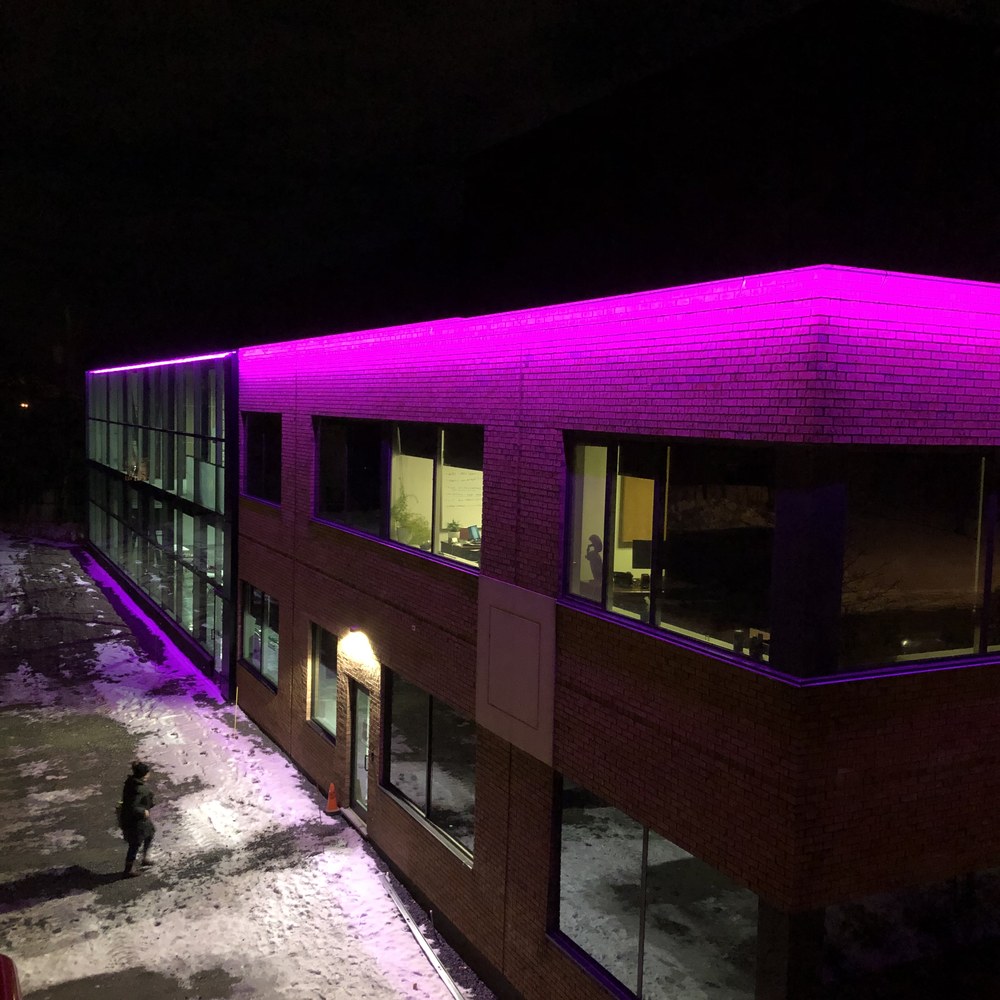
LED floodlights light a specific area: the garage entrance, the backyard, a service door, the back of the lot. The right model depends on the surface. For a residential yard, the 30W-50W-60W floodlight is a good starting point. A farmyard or an industrial area moves up to the 200W-240W-300W or 400W-450W-500W formats, and a sports field to the dedicated 300W to 1000W sports floodlights. The 15W and 50W RGBW floodlights, for their part, colour a façade for the holidays.
Under the roof overhang: recessed soffit lights
Recessed LED soffit lights fit into the roof overhang and light the entrance, the garage surround or the façade from roofline height, with no bright spot visible from the street. Three things to check: the cutout diameter for your soffit (vinyl, aluminum or wood), the moisture rating, and the colour temperature, 2700 K or 3000 K for a warm look on a residential façade. Plan on IP44 in a sheltered spot, IP65 where exposure is direct. All the details are on our LED soffit lights page.
Decks and stairs: LED strip in an aluminum profile
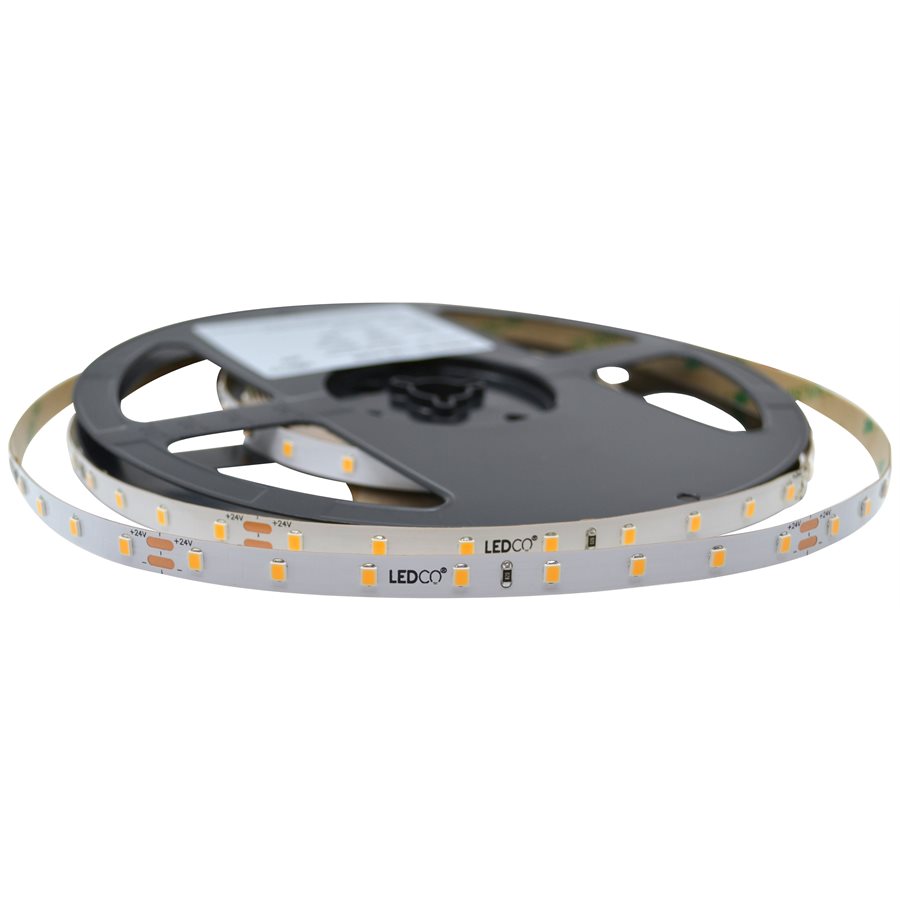
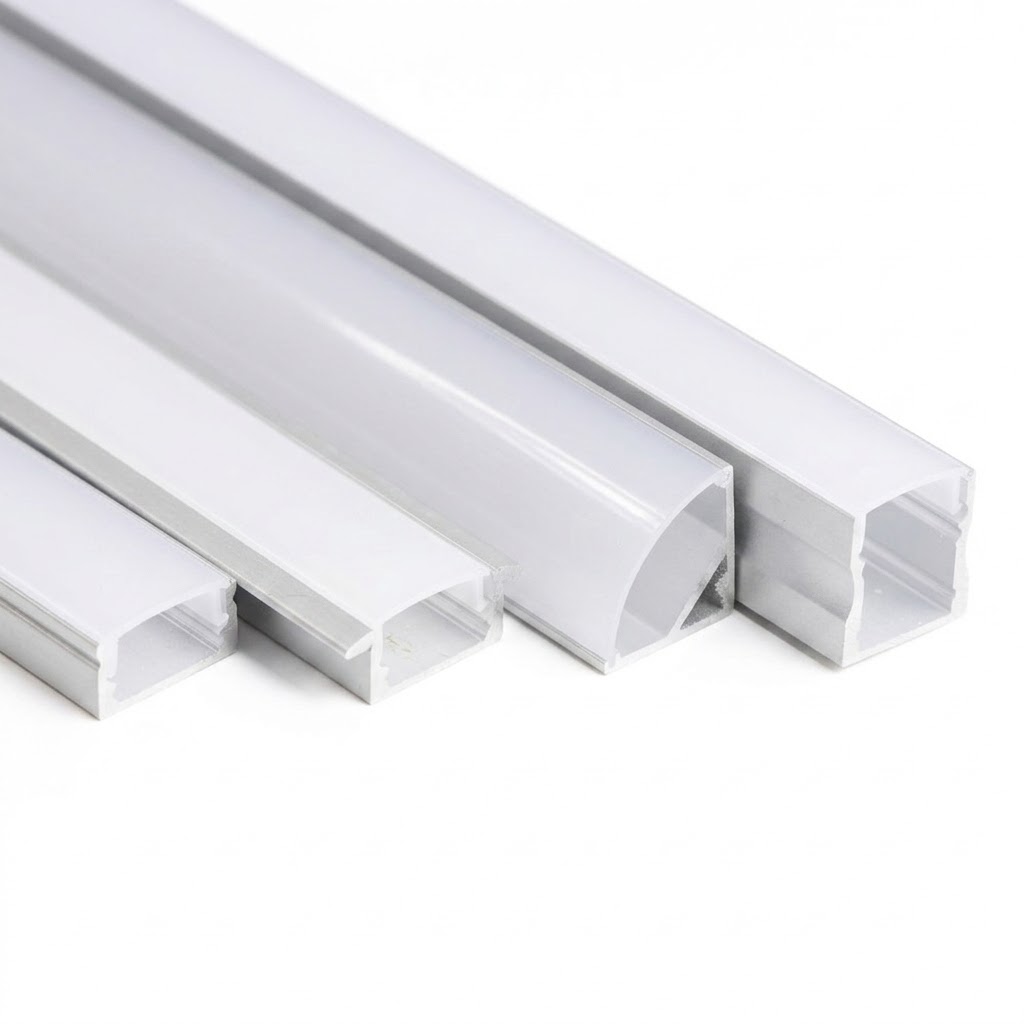
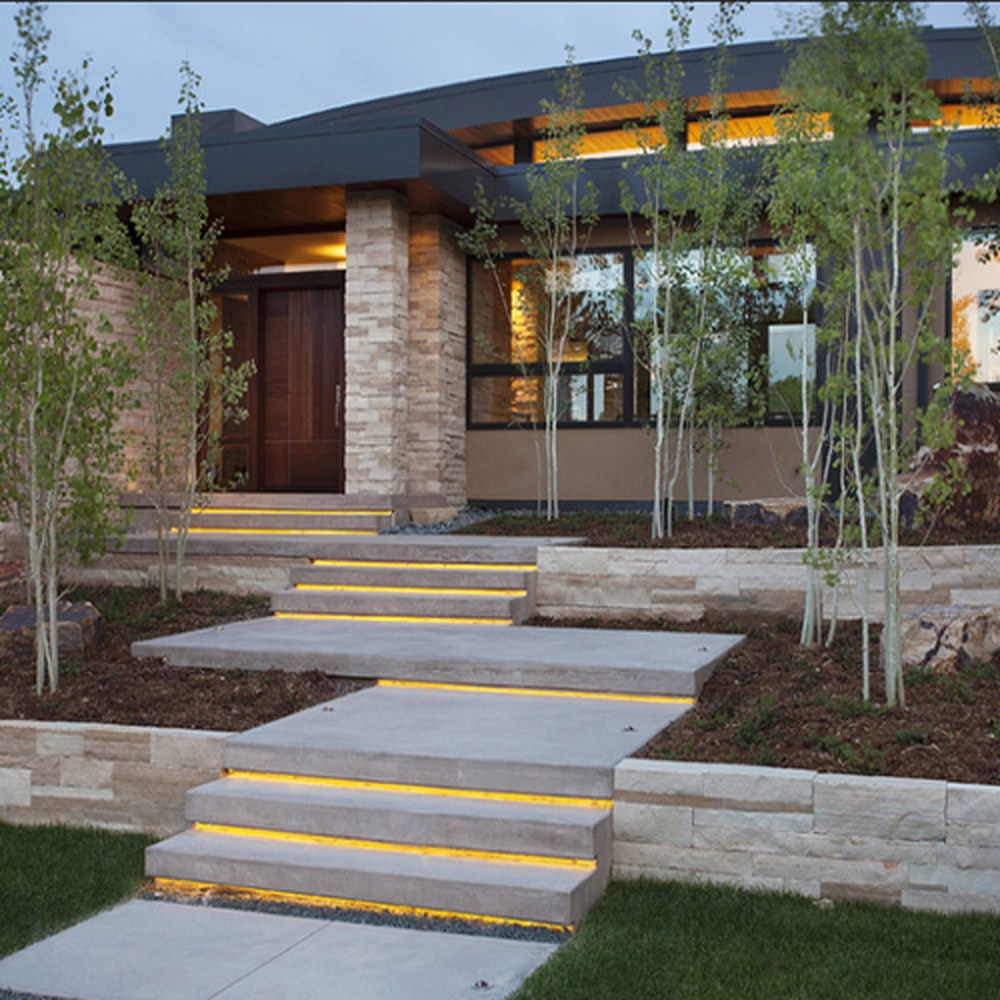
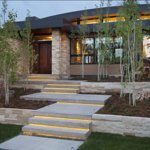
On a deck, the most successful outdoor LED lighting is the kind where you never see the source. An IP67 LED strip housed in an aluminum profile hides under the railing, under the stair nosing or along the joists, and gives low, discreet grazing light. Its silicone encapsulation protects it from rain, condensation and frost. Powered at 24 V by a weatherproof transformer, it can be connected to a timer or a compatible dimmer. For the steps themselves, see our outdoor LED stair lights as well.
Garden and pathways: low-voltage landscape lighting
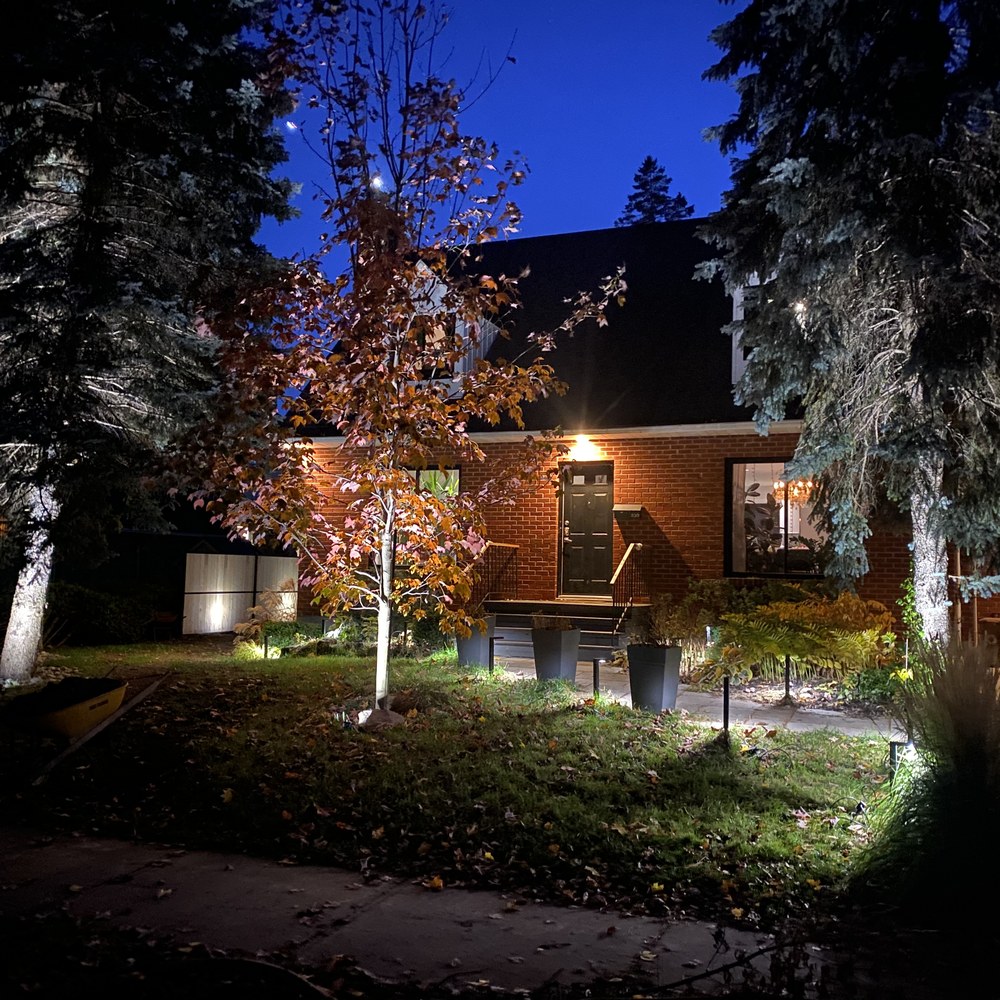
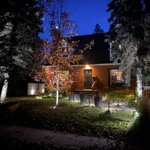
LED landscape lighting runs on low voltage from an outdoor transformer such as the LUVIA 100W. It highlights trees, hedges, planting beds and the architecture of the garden:
- Beds and shrubs: adjustable PICO spotlights go in on a stake and aim at the plant you want to feature.
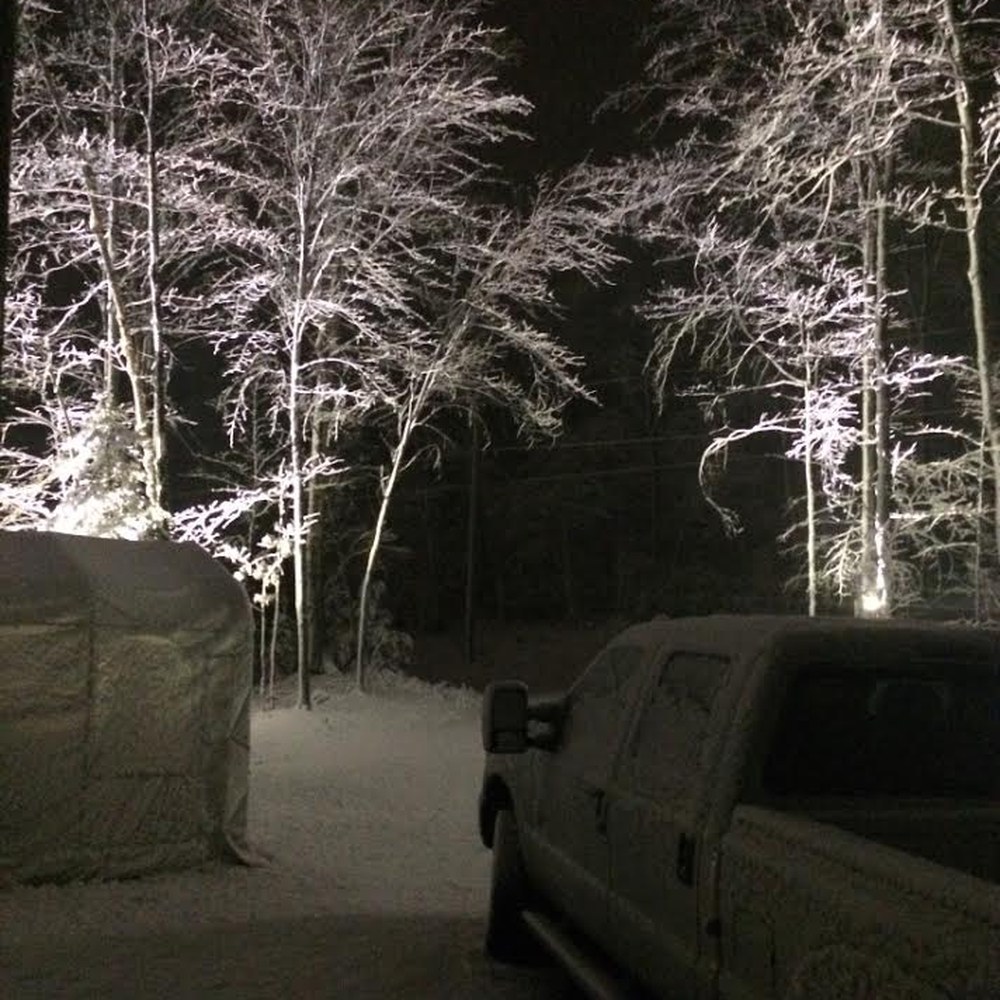
- Trees and columns: bottom-up light brings out the trunk, the stone or the wall.
- Stone or concrete pathways: the PAVO recessed light or a #2000 puck light sits flush in the ground.
- Planting bed borders: a strip in an aluminum profile traces the line of the garden.
The 100-foot 18/2 outdoor landscaping wire, outdoor marettes with silicone and the IP68 junction box complete the wiring. The whole range is in our LED landscaping section.
Parking areas, shelters and docks: bollards and canopy lights
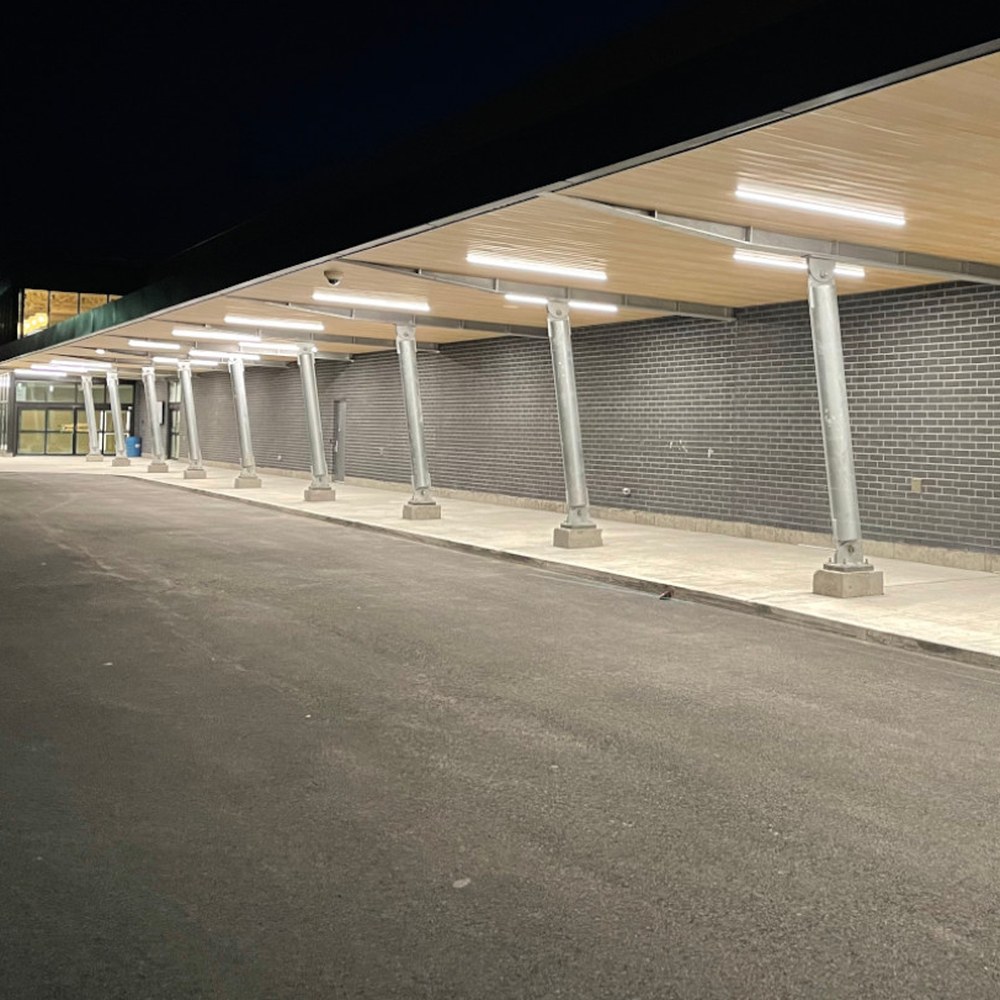
For a small residential or commercial parking area, one or two well-aimed wall packs are usually enough. For a larger one, LED bollards or pole-mounted floodlights complete the layout; bollards mark the driveways and light at pedestrian and vehicle height. Under a covered structure, such as a shelter, a gas station or a loading dock, the 120V-347V LED canopy light delivers high, uniform light at 25W, 40W or 60W.
Technical tips for outdoor LED lighting
IP65 at a minimum outdoors. This rating stands up to water jets and wind-driven snow: it is the floor for any exposed fixture.
IP67 at ground level and under steps. Borders, pathways and stair nosings need a fixture that withstands temporary immersion.
One white per use. 4000 K or 5000 K for security and parking, 2700 K or 3000 K for the façade, the deck and the garden.
Automate the switching. A 120V photocell turns the fixtures on at dusk and off at dawn; a timer does the same job on a low-voltage circuit.
Check the voltage before ordering. Our 120V-347V wall packs and floodlights work on 120 V residential as well as 347 V commercial supply; the doorway wall pack is rated 120V-277V.
To see a project completed with our products, browse our accomplishments, including the Pasquier project in Delson. And where there is no electricity, our solar outdoor lighting takes over.

Outdoor LED Lighting FAQ
What lighting works best for a deck or patio?
For ambiance, an IP67 LED strip in an aluminum profile, hidden under the railing, the steps or the joists, in 2700 K or 3000 K. To cook or read outside, add a wall light or a floodlight aimed at the table. Keep the same colour temperature everywhere for a consistent result.
What are the best outdoor lights for the front of a house?
At the entrance, a warm-white wall light on each side of the door; under the roof overhang, recessed soffit lights; along the walkway, low-voltage landscape lighting. For wall lights and façade fixtures, see our outdoor LED light fixtures page.
Which outdoor LED lights are truly waterproof?
Look at the IP rating. An IP65 fixture withstands water jets and wind-driven snow, which is enough on a wall or under an exposed overhang. At ground level, in a border or under a step, go with IP67, which withstands temporary immersion.
Can you use LED can lights outdoors?
Yes, in the soffit, under the roof overhang. An IP44 recessed light suits a sheltered area, and IP65 is required if rain can reach it directly. They run on a standard 120 V residential supply.
How do I switch outdoor LED lighting on automatically?
With a photocell, which turns the lights on at dusk and off at dawn, or with a timer on the low-voltage circuits of the deck and garden. To plan the whole layout, contact the LEDCO team with a plan or photos of your property.